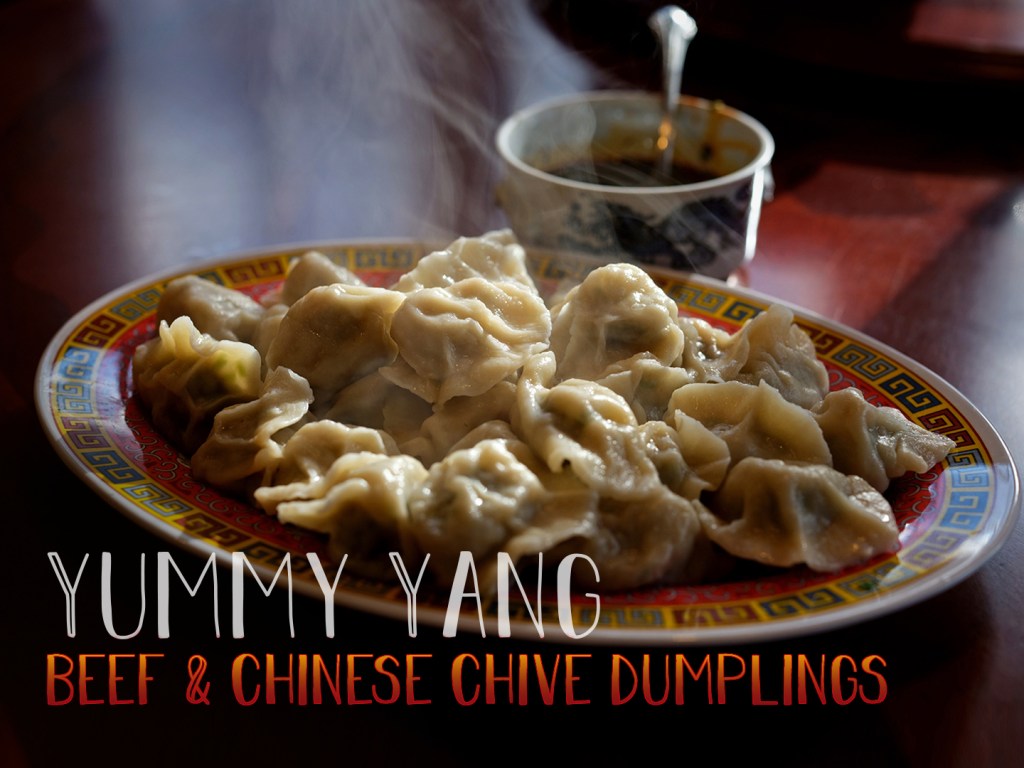
- Approximate Time: 90 Minutes
- Makes ~50 Dumplings
- Dough Ingredients
- All-purpose flour
- Meat Filling Ingredients
- Ground beef, 80% lean or less
- Raw shrimp, finely chopped
- Chinese chives, chopped
- Chinese prickly ash powder
- Chicken bouillon
- Fresh ginger
- Pure sesame oil
- Vegetable oil
- Cooking wine
- Soy sauce
- Salt and pepper
- Sauce Ingredients
- Cilantro, chopped
- Garlic, minced
- Soy sauce
- Chinese black vinegar
- Fried chili in oil, preferably LaoGanMa brand
- Olive oil
- Sugar
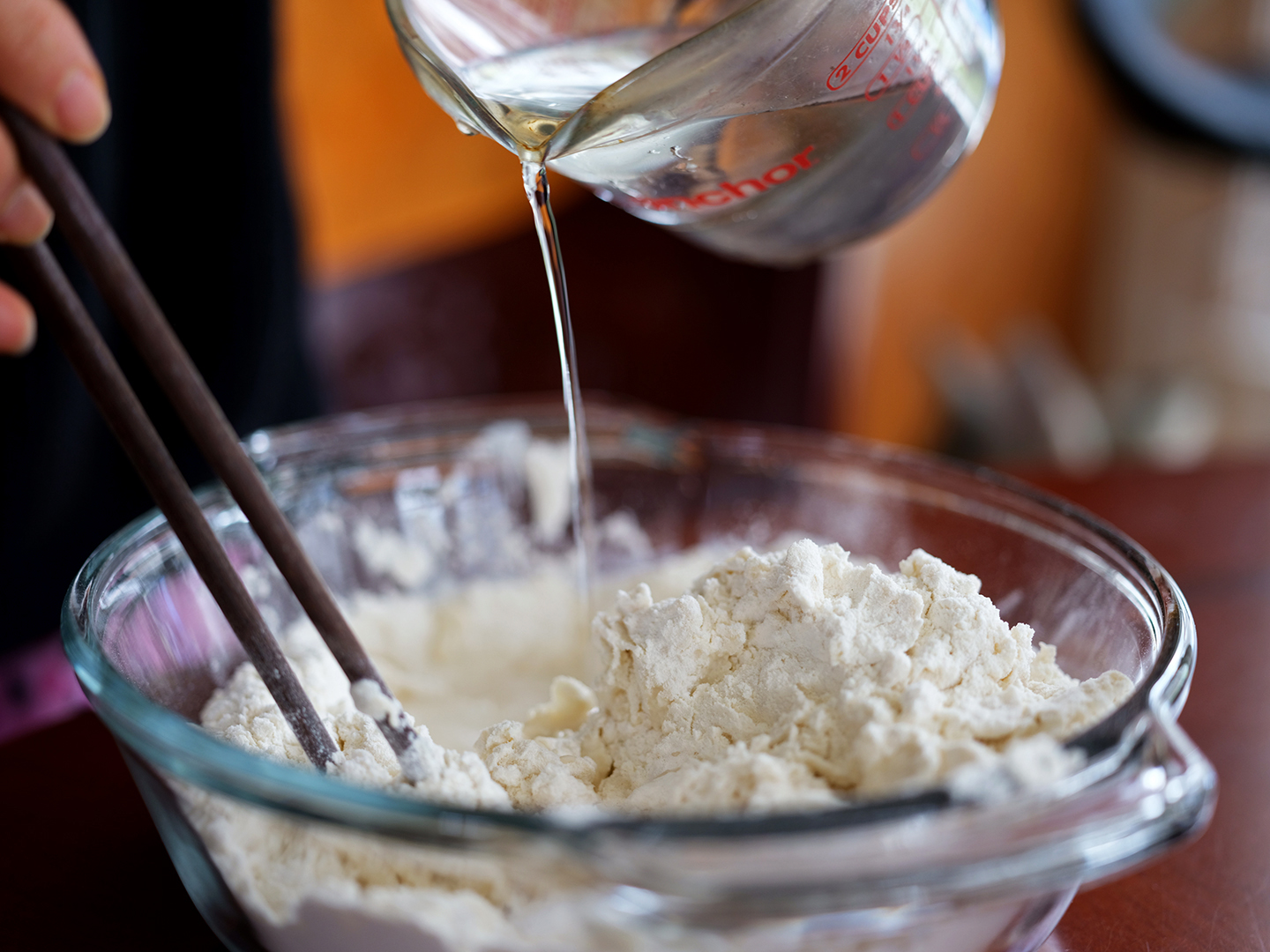
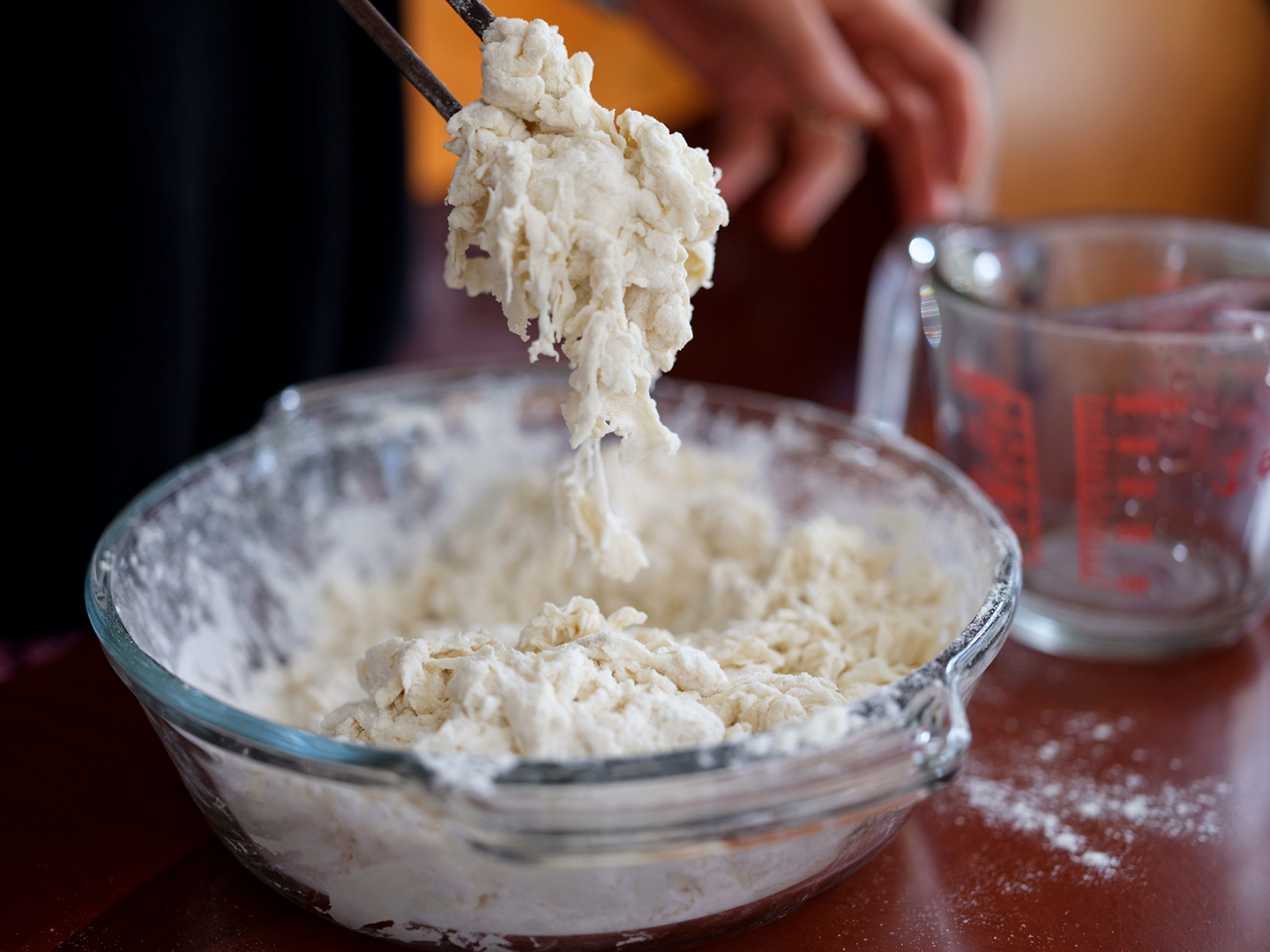
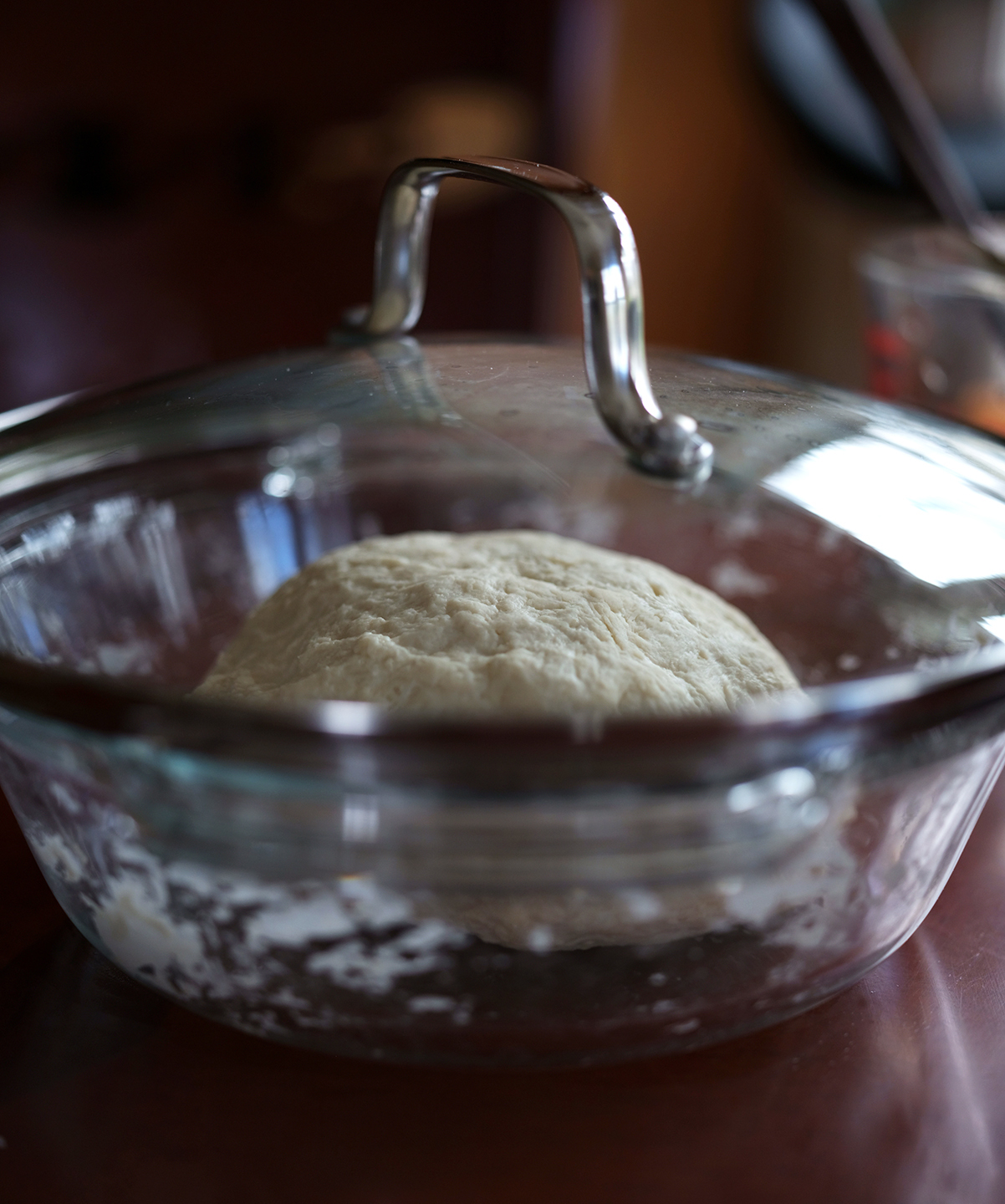
In a large bowl, start with 3 cups of all-purpose flour. Add 1 cup of lukewarm water in increments until a dough is created. Let the dough sit for 30 minutes, covered.

While waiting for the dough, prepare your meat filling. The higher the fat content of the meat, the more delicious your dumplings will be. For this particular recipe, we used an 80% lean ground beef selection based on what we had available. This is a fun twist on a more traditional ground pork mixture.
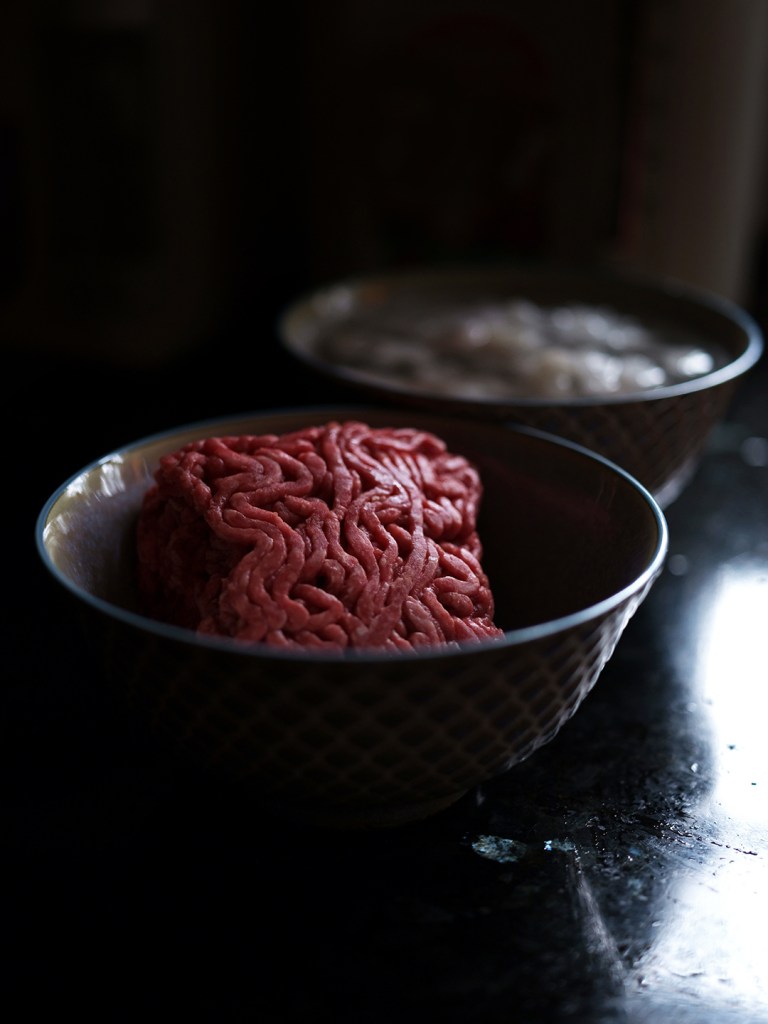
In a large bowl, season 12 ounces of ground beef with 1/2 tablespoon of salt and a dash each of black pepper, fresh minced ginger, chicken bouillon, and Chinese prickly ash powder. Add in 1 tablespoon each of pure sesame oil and soy sauce. Drizzle in a little vegetable oil and cooking wine to bring out the flavors. Vegetable oil would not be needed in partnership with meat mixtures that have a higher fat content.
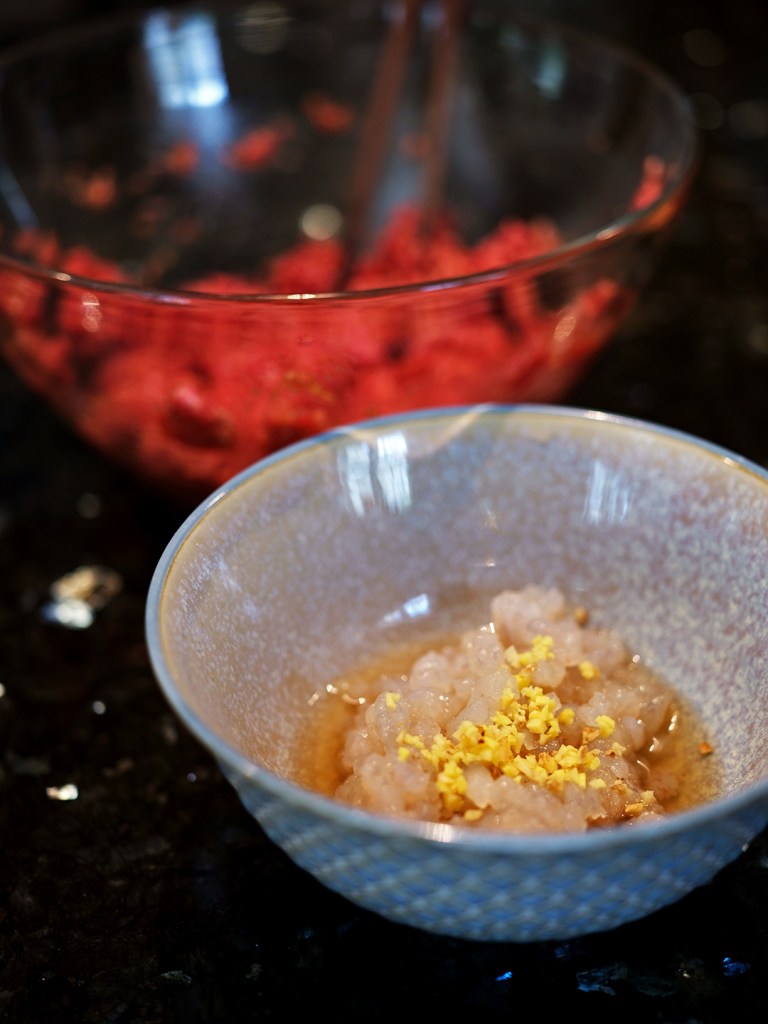
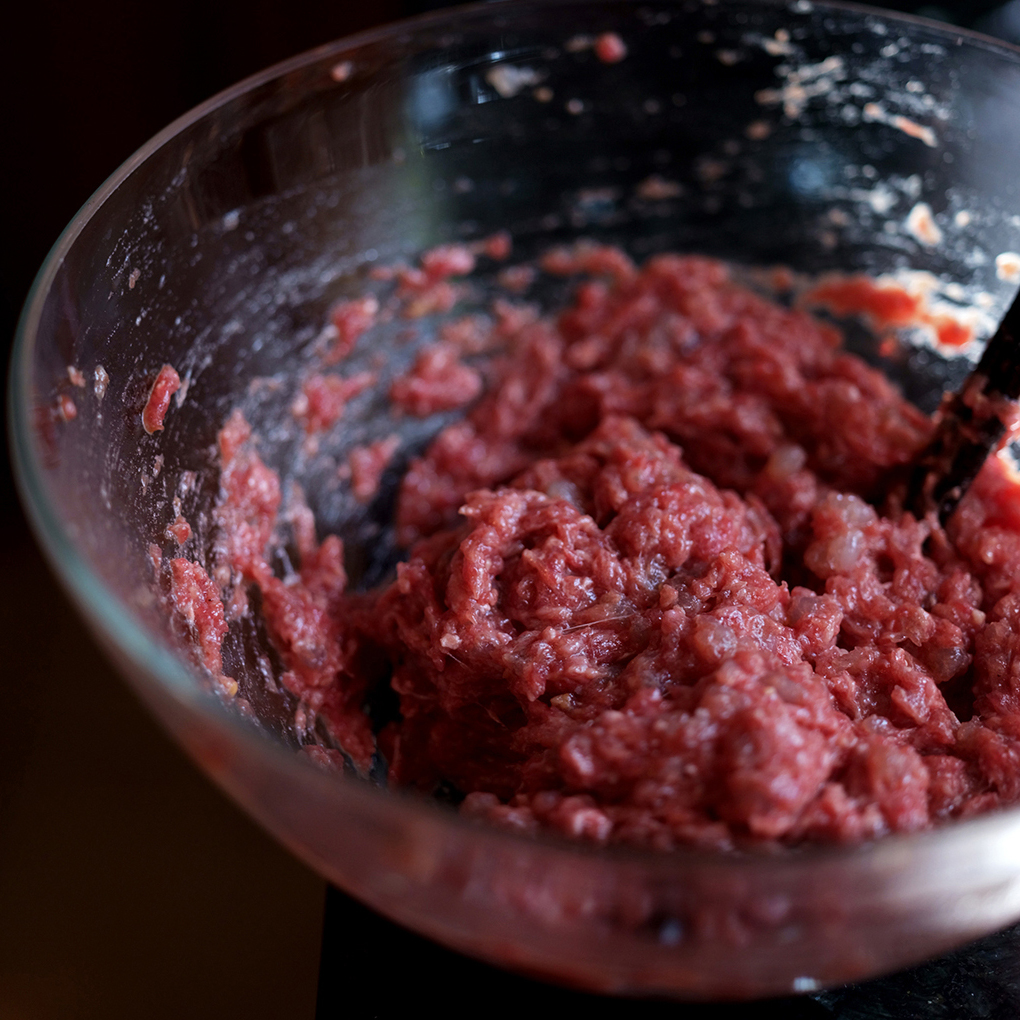
Begin mixing the meat in one direction to elongate the ‘fibers’ of the meat lengthwise. This method will allow for maximum consistency of texture and taste across the filling. While mixing, add in 1/3 cup of cold water in small increments to ensure a sticky filling, which in turn ensures a juicy dumpling. We’re adding in some water to this recipe because chives don’t produce much water when cooked. If we were to use vegetables with higher water content, we would skip the addition of water here. Stir in 6 ounces of chopped raw shrimp last to maintain as much of the natural shrimp flavor as possible. Use the same one-directional stirring method throughout.

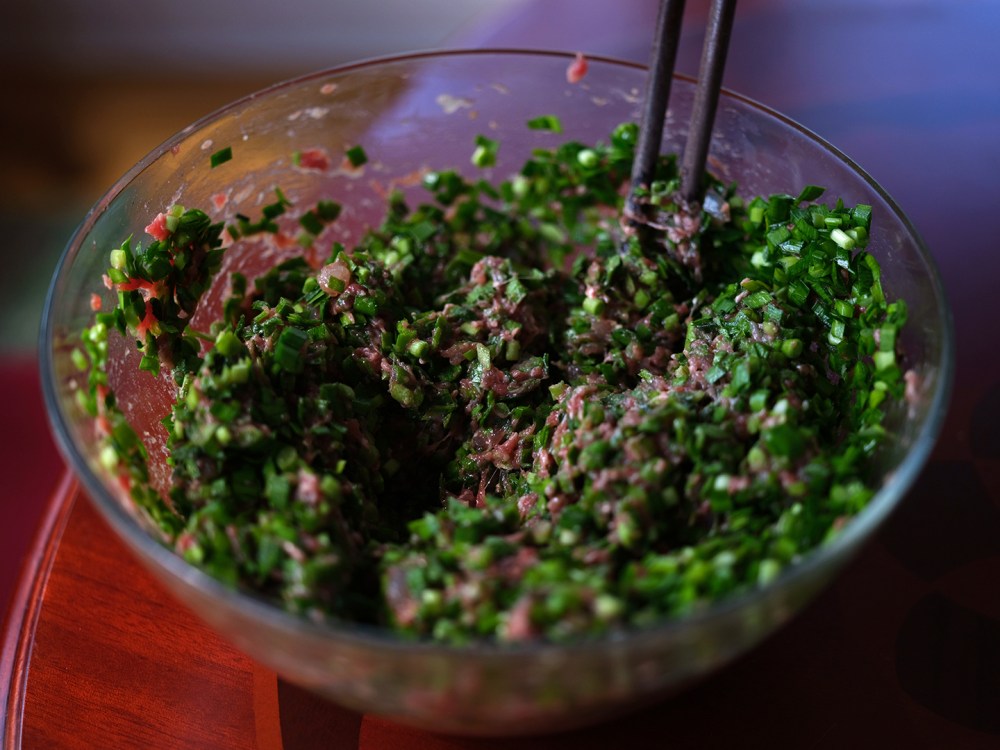
In a separate bowl, toss 12 ounces of finely chopped Chinese chives with a light sprinkling of salt. Uncut, these chives would amount to a thick batch that your hand should fit tightly around.

Stir in chives to the meat mixture. The texture of the filling should be pasty and sticky, and easy to push around, but maintain its form. If it’s too thick, add minor increments of water and vegetable oil, and again mix in a one-directional method with vigor.

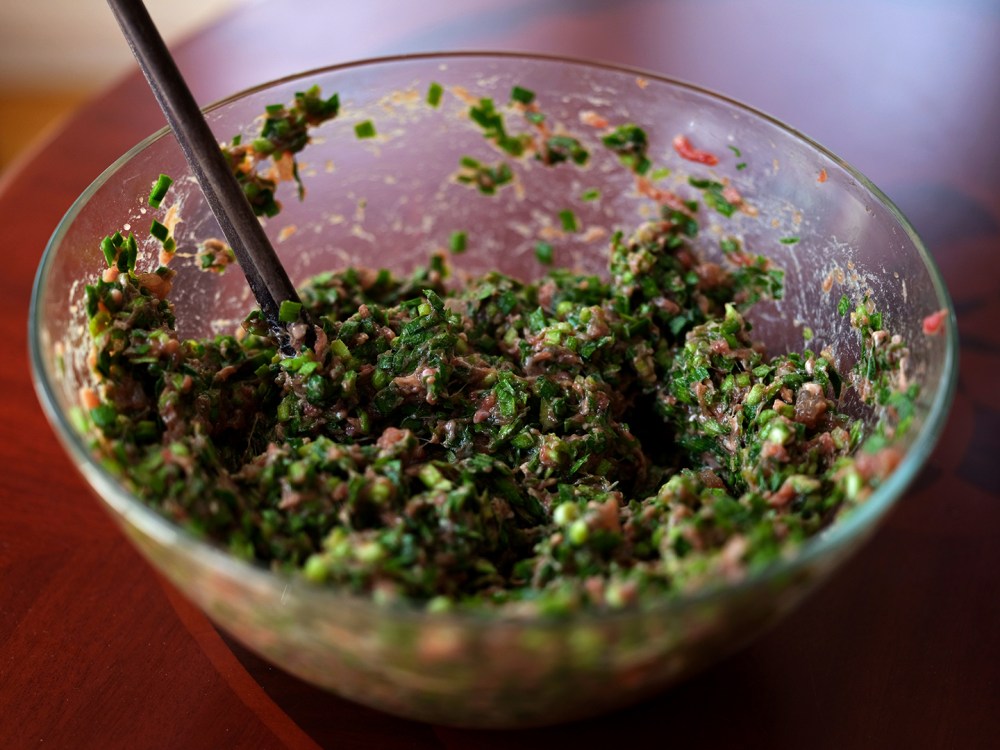

Set aside and let’s return to the dough.
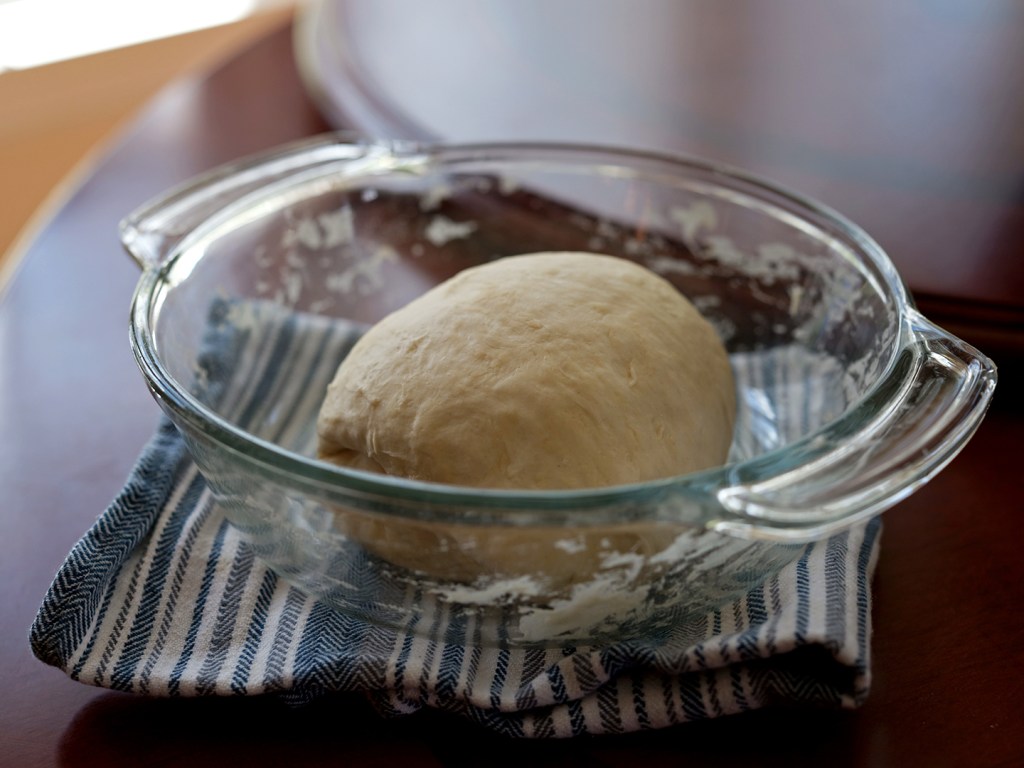
Grab a large handful of the sticky dough and knead for several minutes over flour-dusted board until a smooth ball is created.
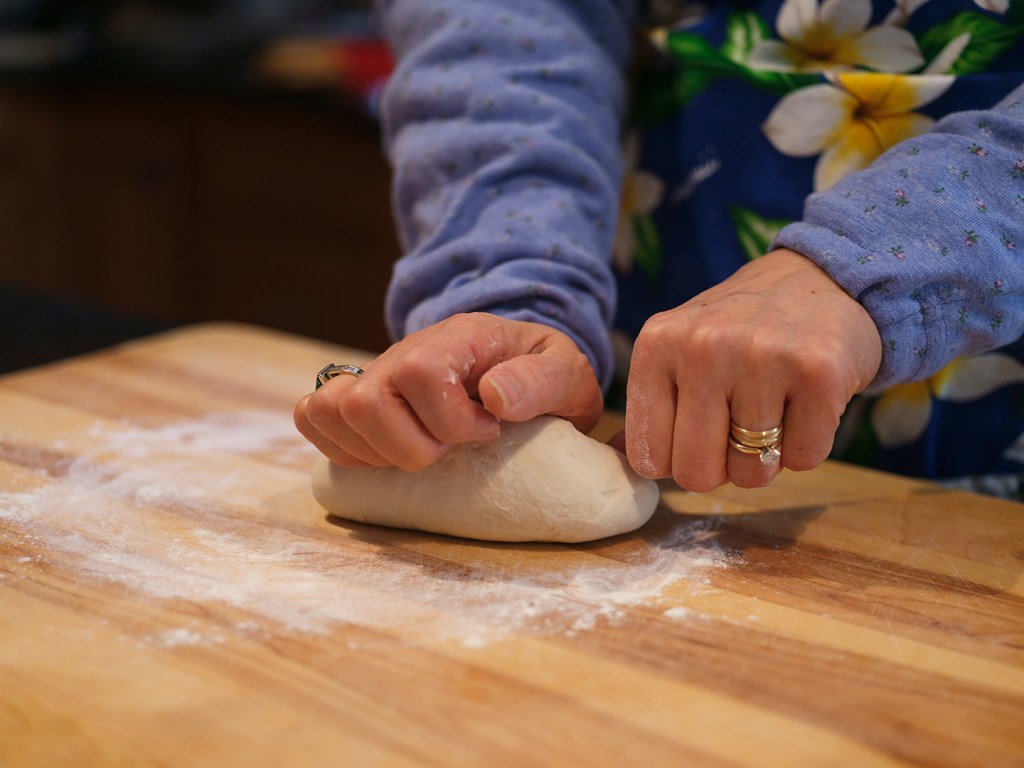
Make this ball into a doughnut, working the doughnut hole larger and larger. Powder the doughnut and continue to expand it until the dough’s diameter is approximately 1 inch.

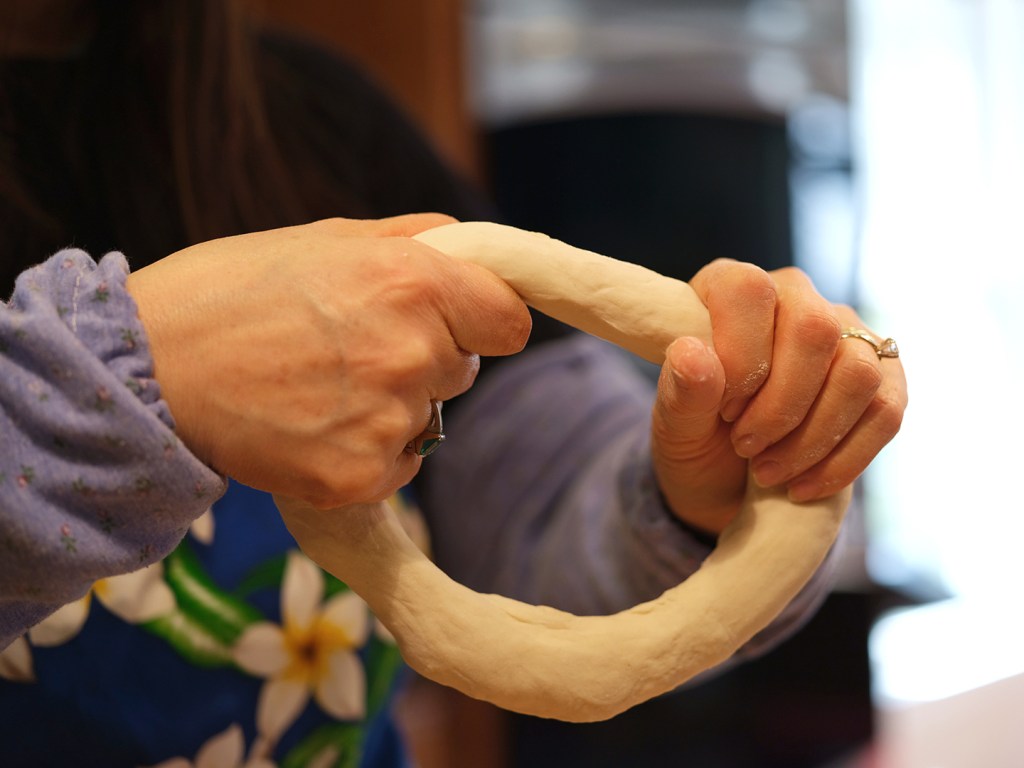
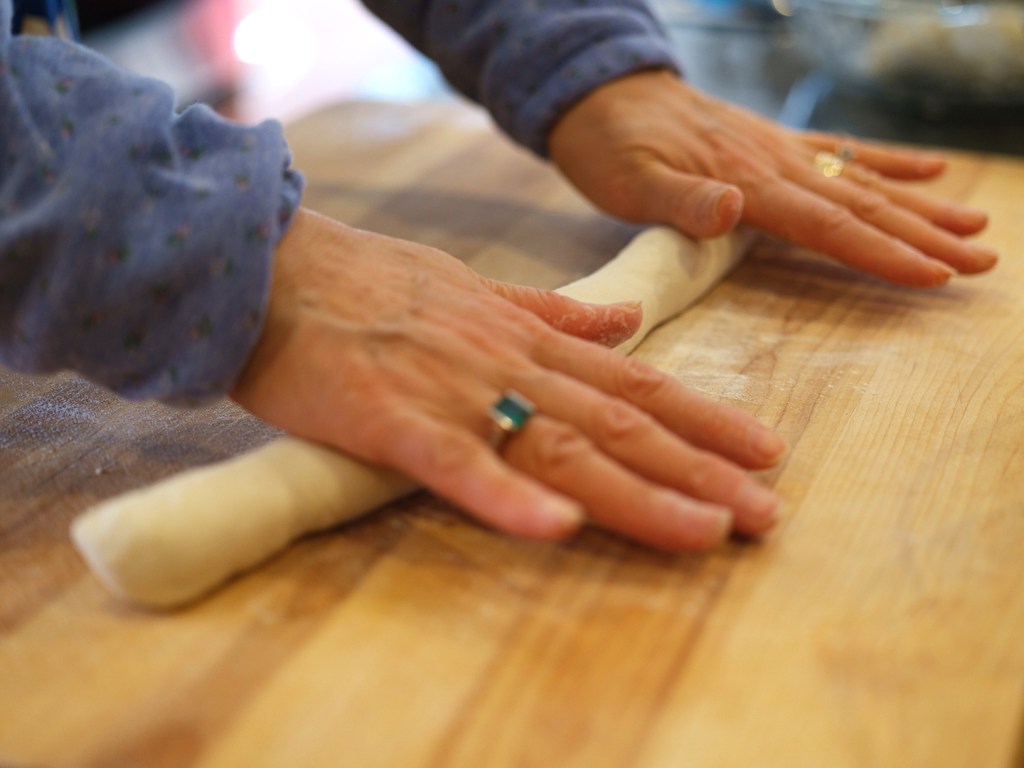
Break the doughnut into a long snake, and roll with your hands until smooth.
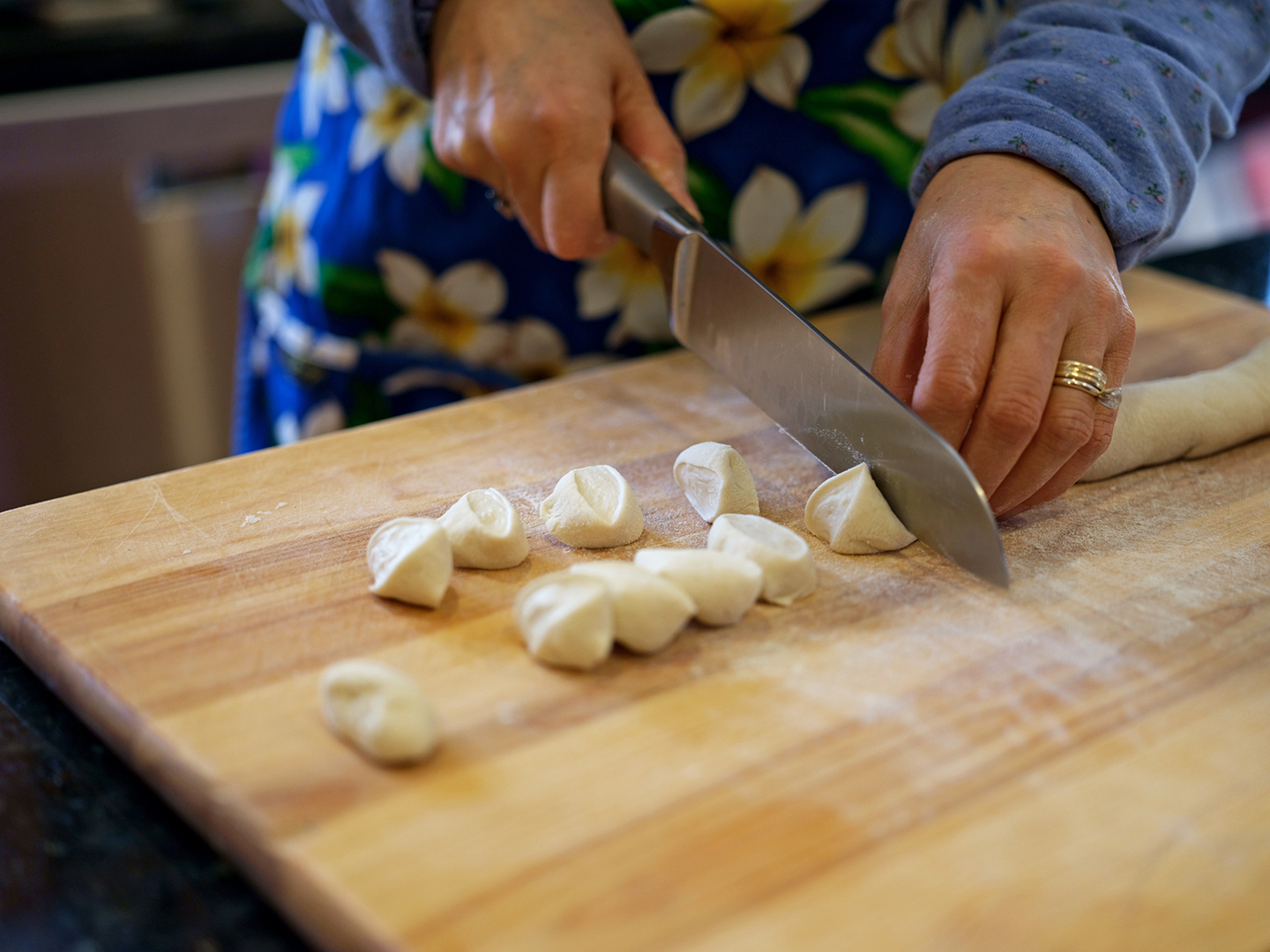
Cut into 1/2″ segments, dusting all sides liberally in flour after cutting.
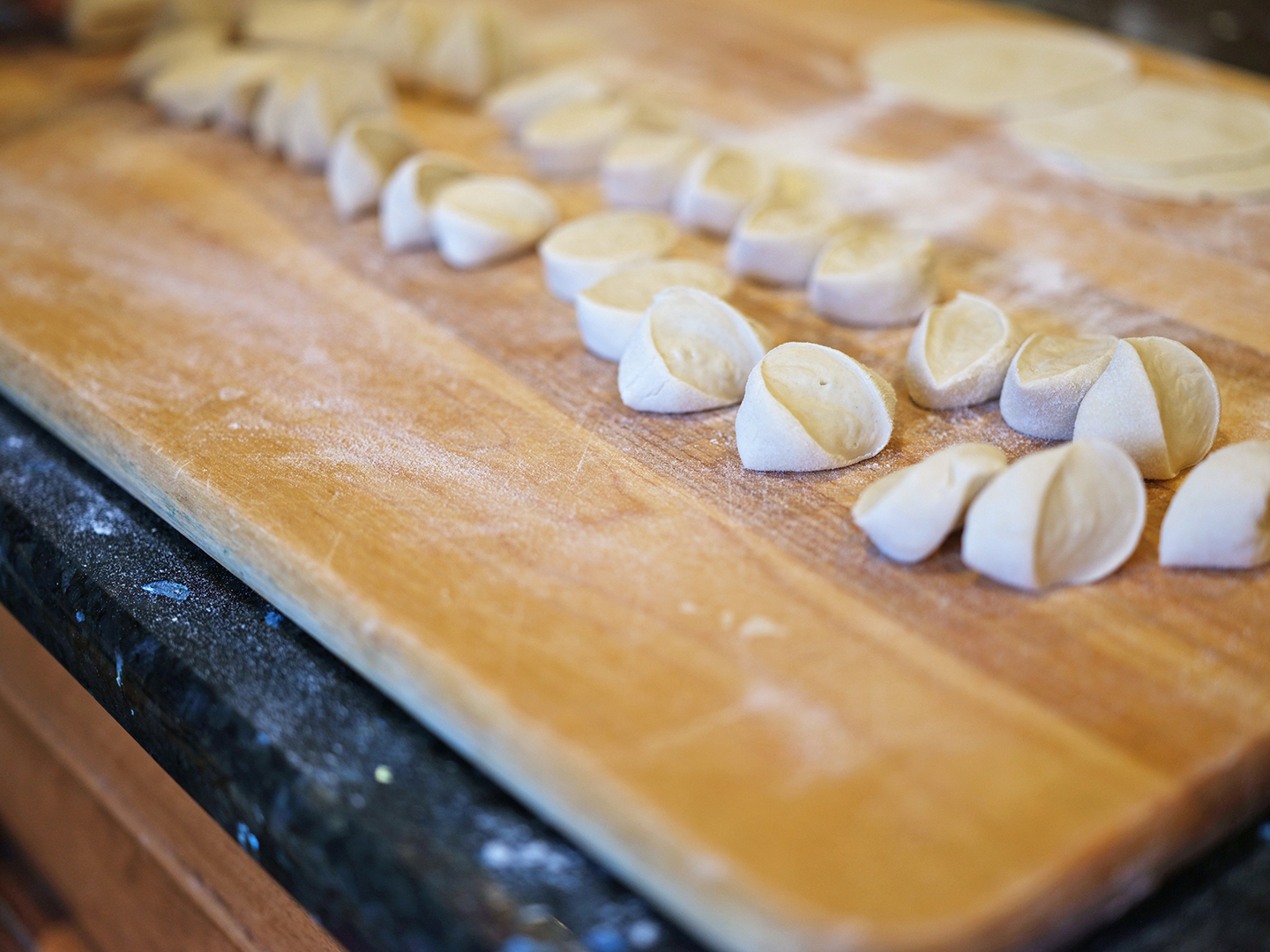
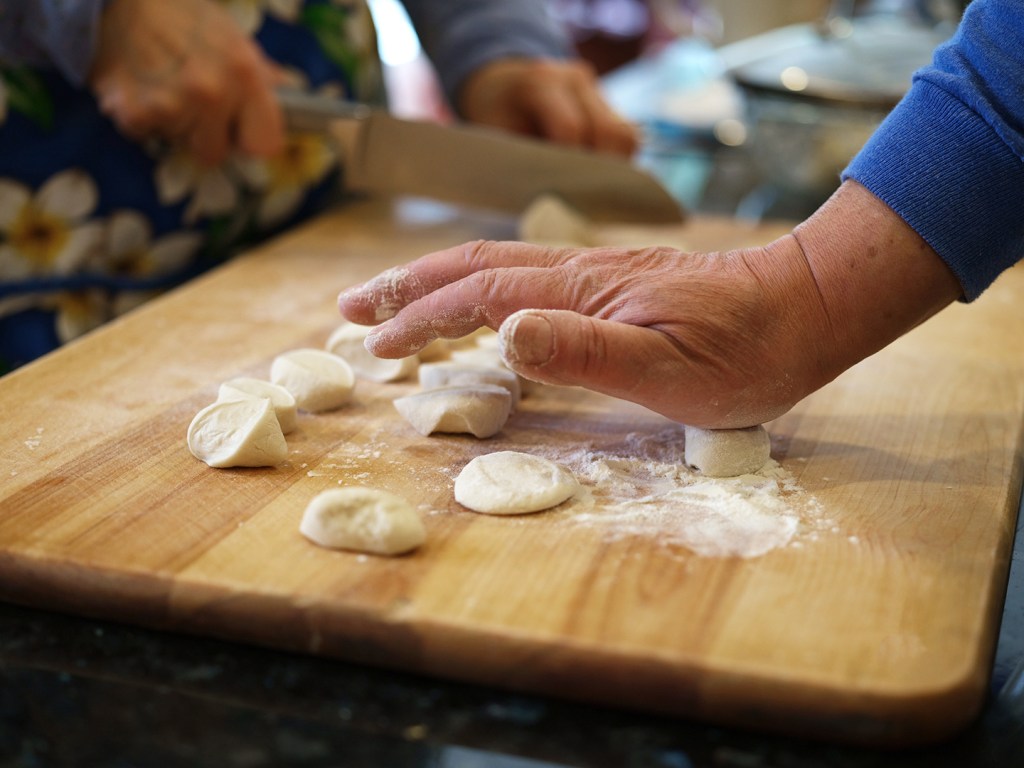
Push down on these segments with your palm to make mini-pancakes.
Then, you’re ready to roll.
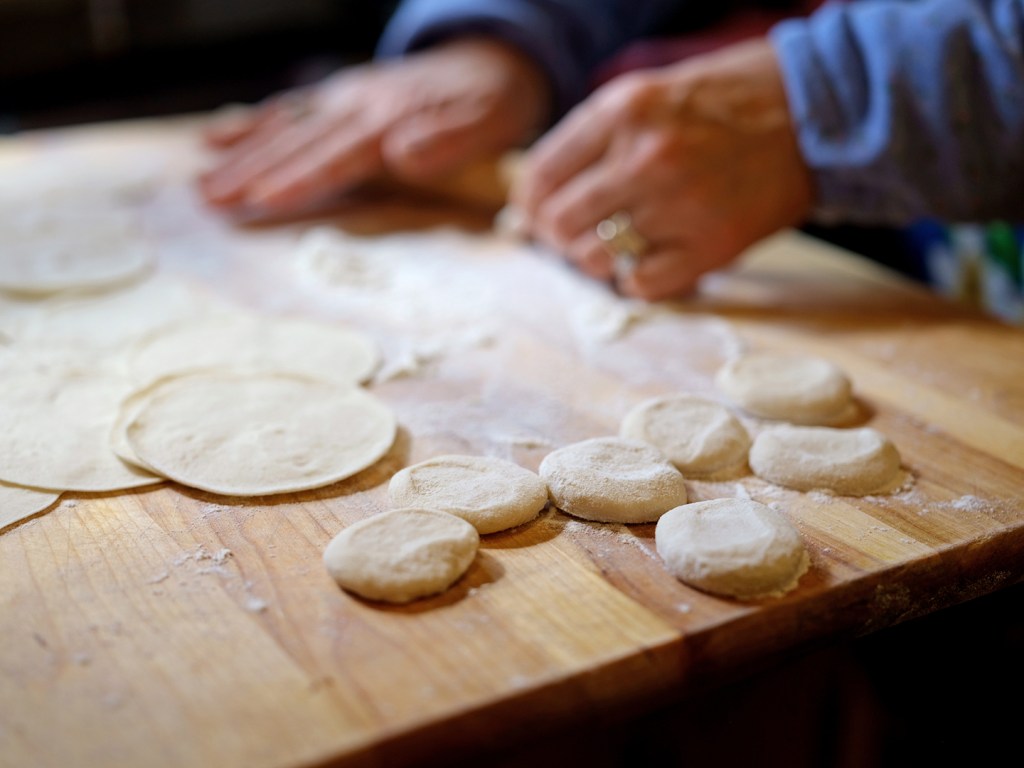
To roll the individual dumpling dough, take a mini-pancake and roll with a small rolling pin inward four times, once on each side of the pancake. Imagine the dough exists in quadrants: for example, there’s a North, East, South, and West side. Roll inward on each quadrant once (NESW), and then in the same order a second time (NESW). Make sure you have a liberal amount of flour beneath your pancakes to prevent sticking.
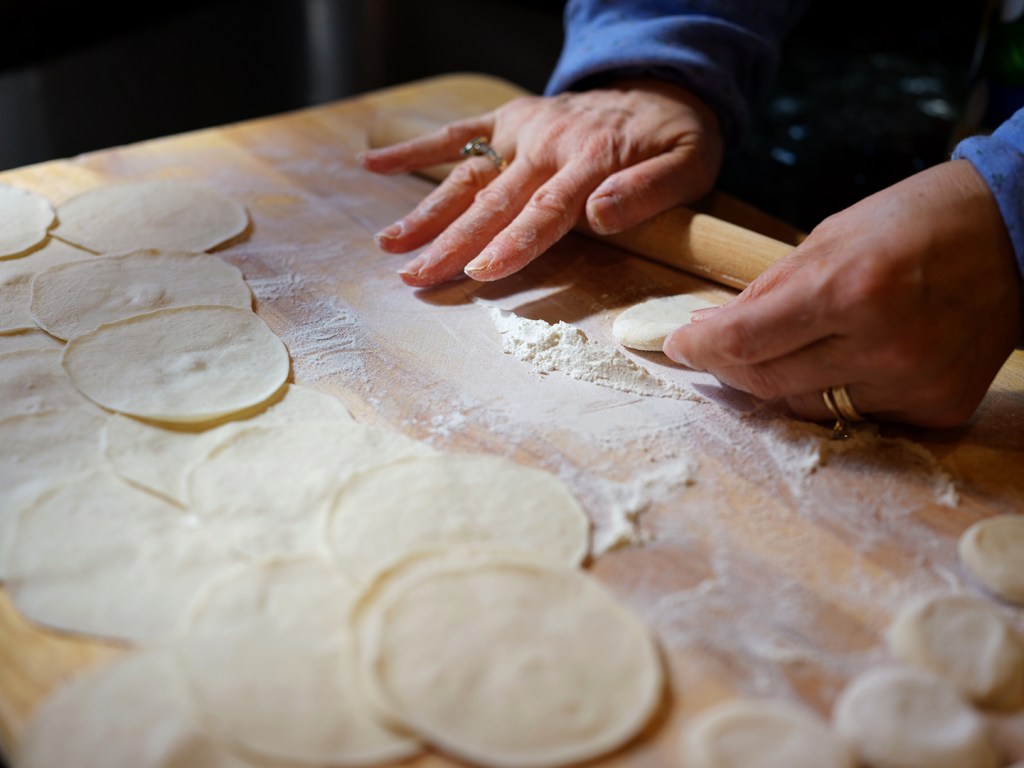

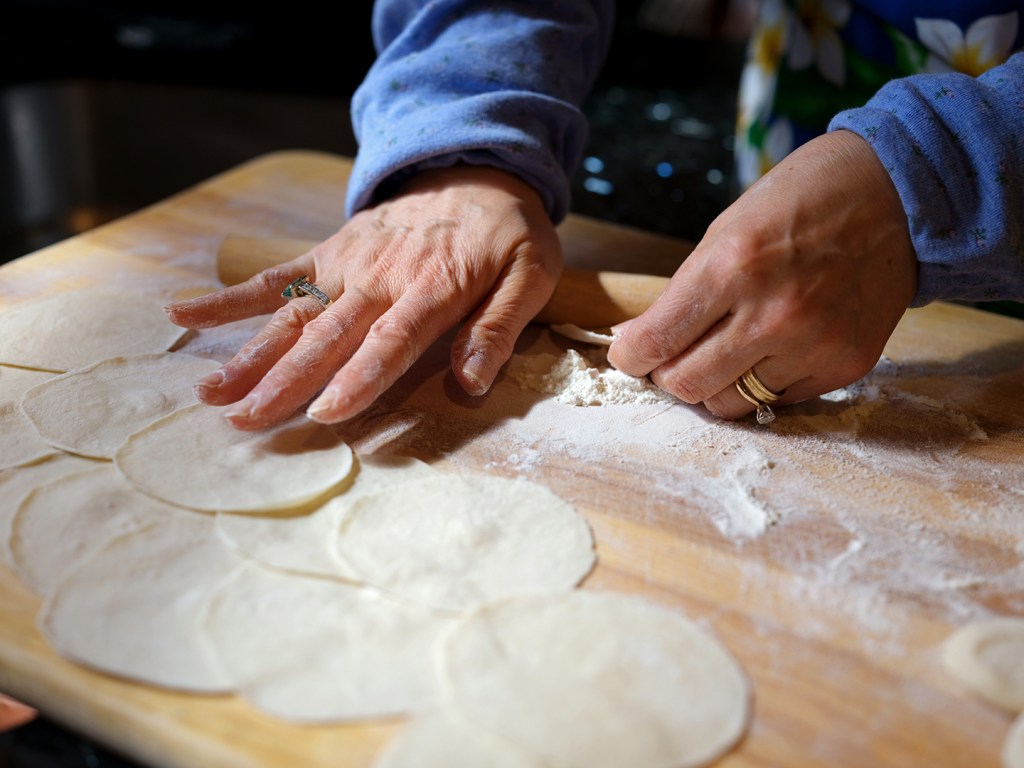
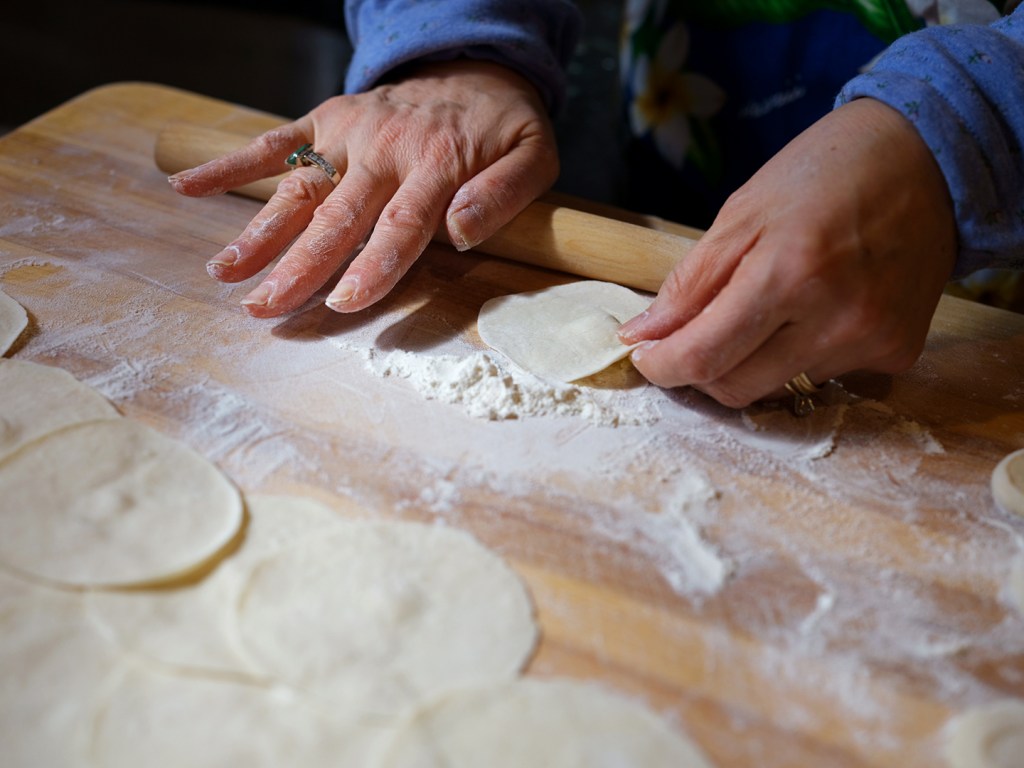
The final flattened pancake should be quite thin, but there should be some variation to the thickness of the dough. The middle section of the dough should be slightly thicker than the outsides, as it will be “holding” the meat filling like a purse and should therefore be a bit stronger. The outside parts should be thinnest, since they will connect to opposite sides of the dough to form the dumpling. Both sides of the flattened pancakes should be coated in flour and should not stick to one another when stacked, although you should wrap them before too long.

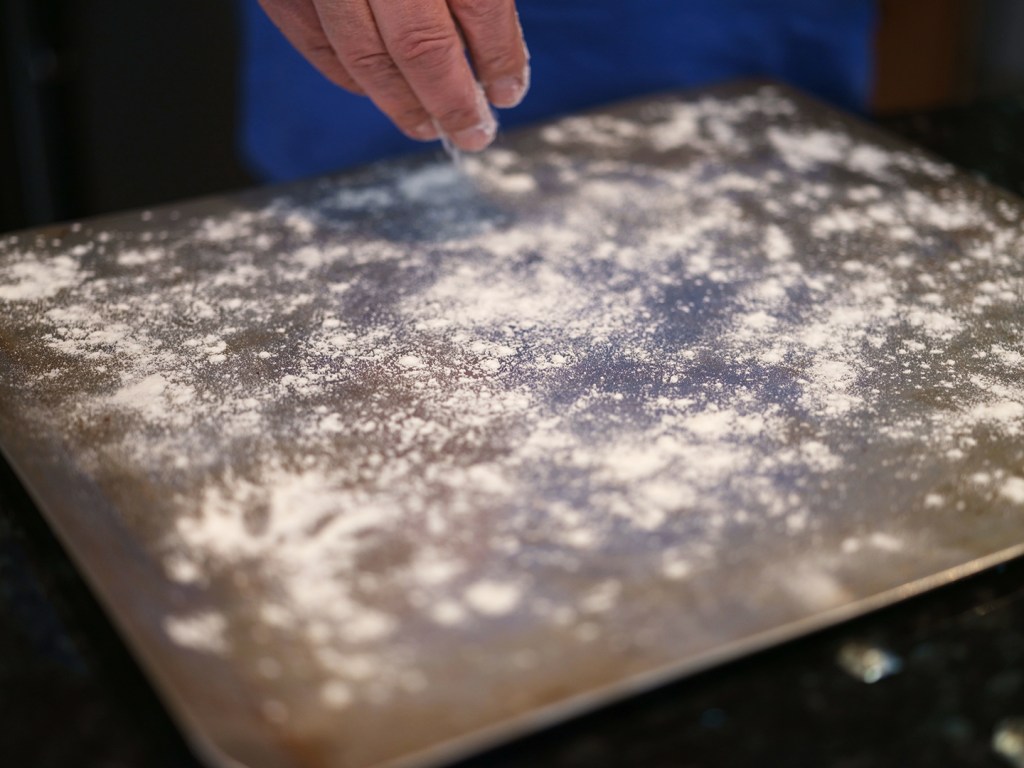
Dust a baking pan liberally with flour to prepare the waiting area for the ready-to-cook dumplings.
To wrap the dumplings, take flattened dough and place 1 tablespoon of meat mixture evenly on the center of the dough.
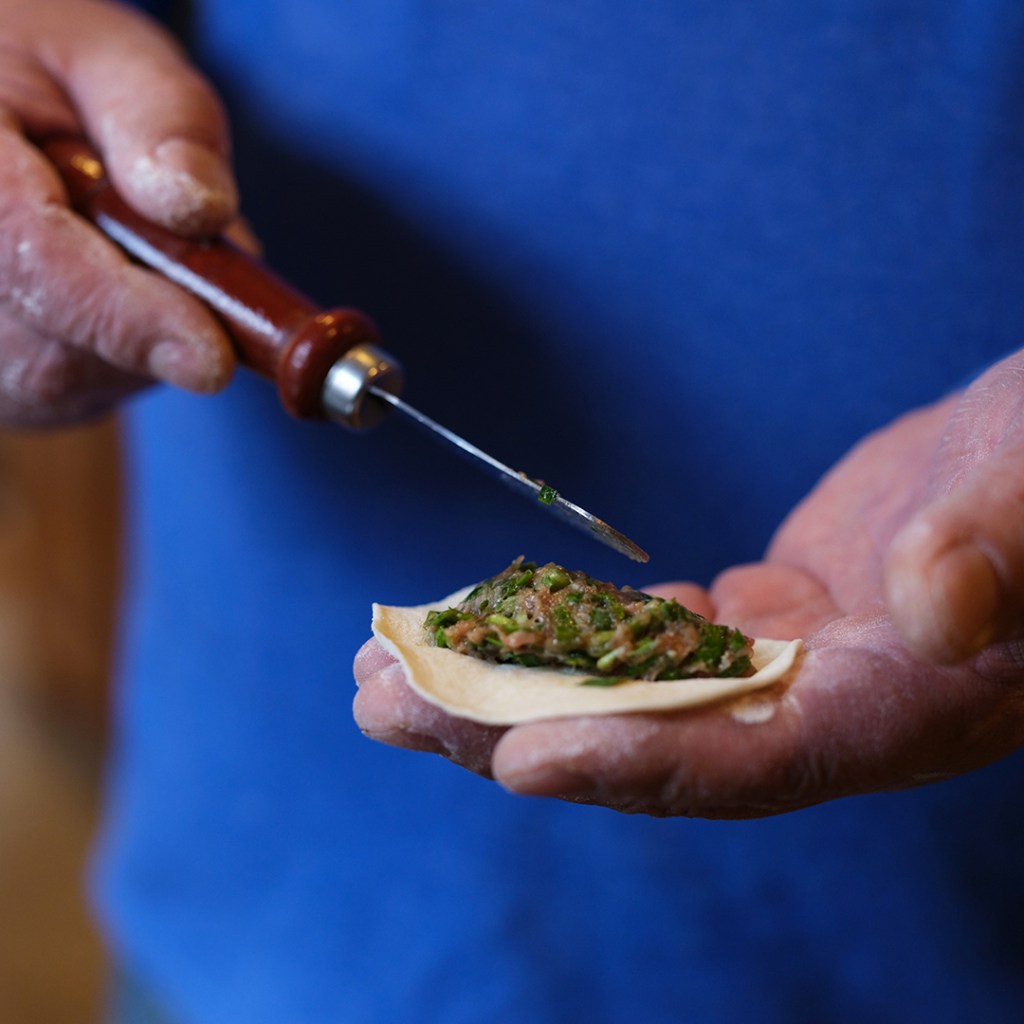
There should be roughly 1 centimeter of space from the edge of the dough, but that’s for more professional and practiced dumpling folders. Don’t be afraid to start with less meat filling to understand the overall folding process; it will be easier.
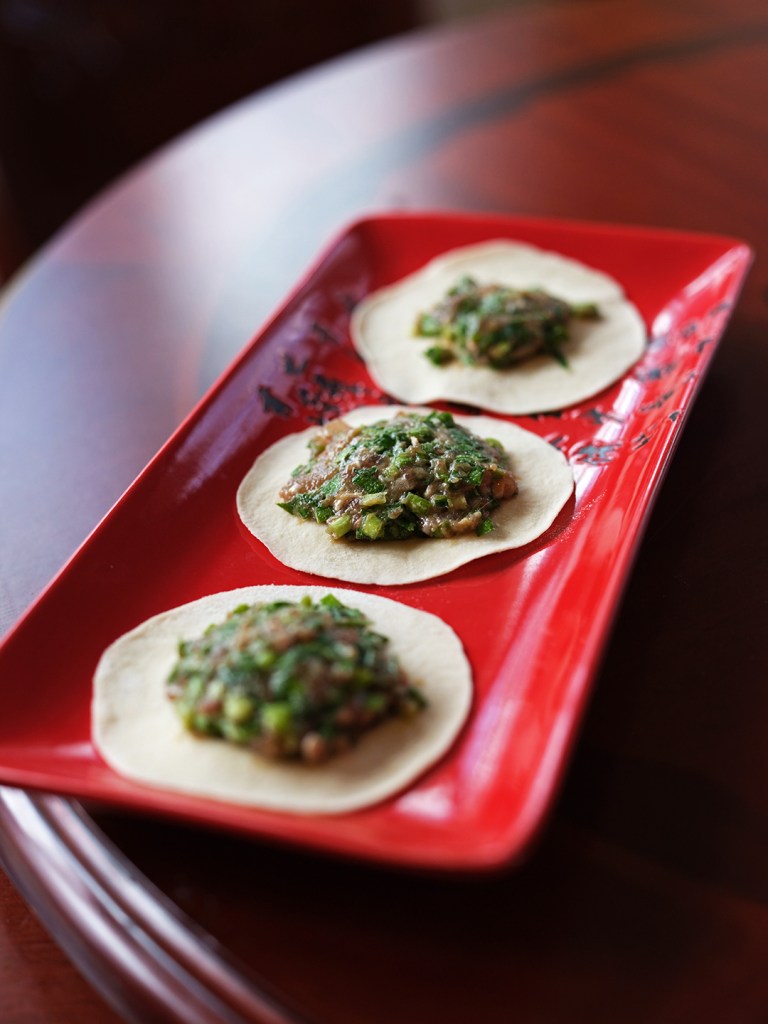
Fold in half like a taco and pinch all edges of the clean dough together.
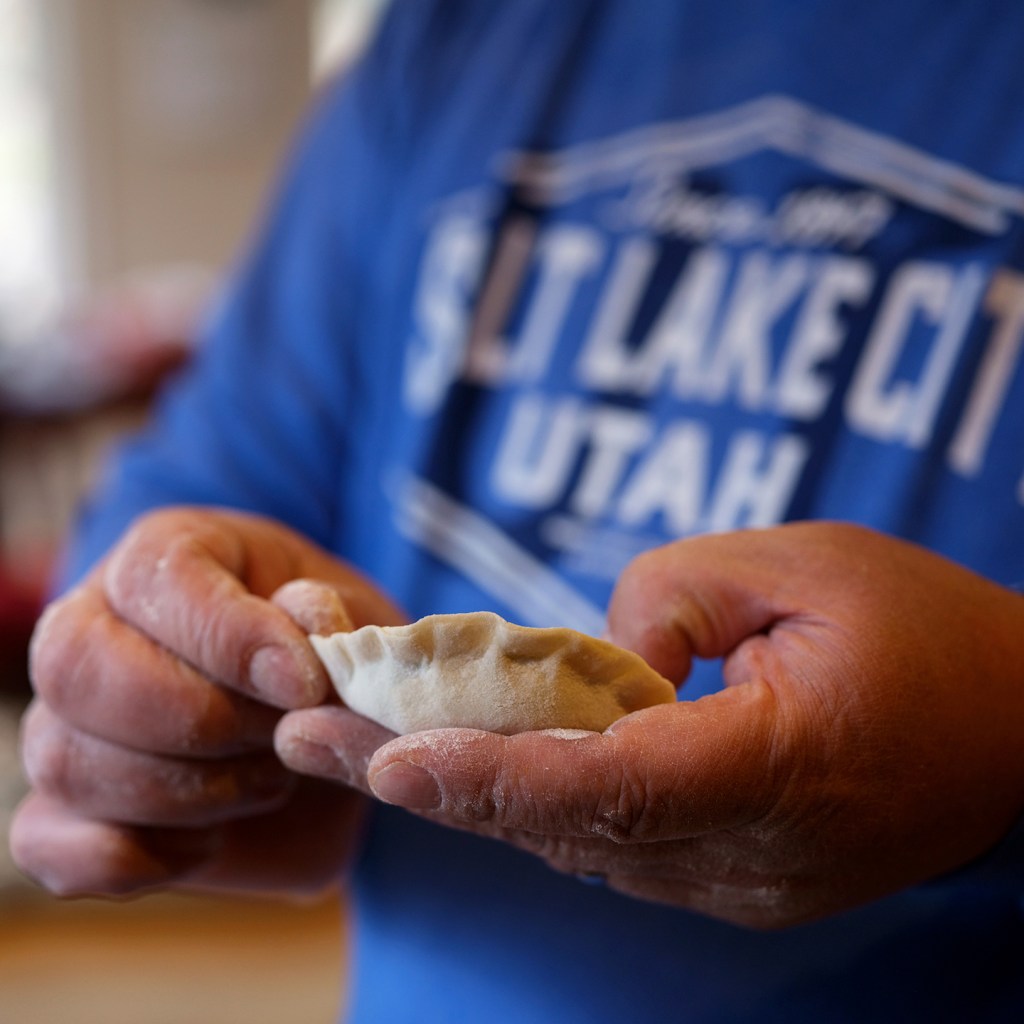
Technically, this pinching method alone should suffice. However, for a super-secure fold, we like to double down with the following technique: place folded dumpling edge flatly along your left index finger, pressing firmly with your thumbs to secure contact of the crust. Pinch down and push the belly of the dumpling together; this will make a rounder shaped dumpling.
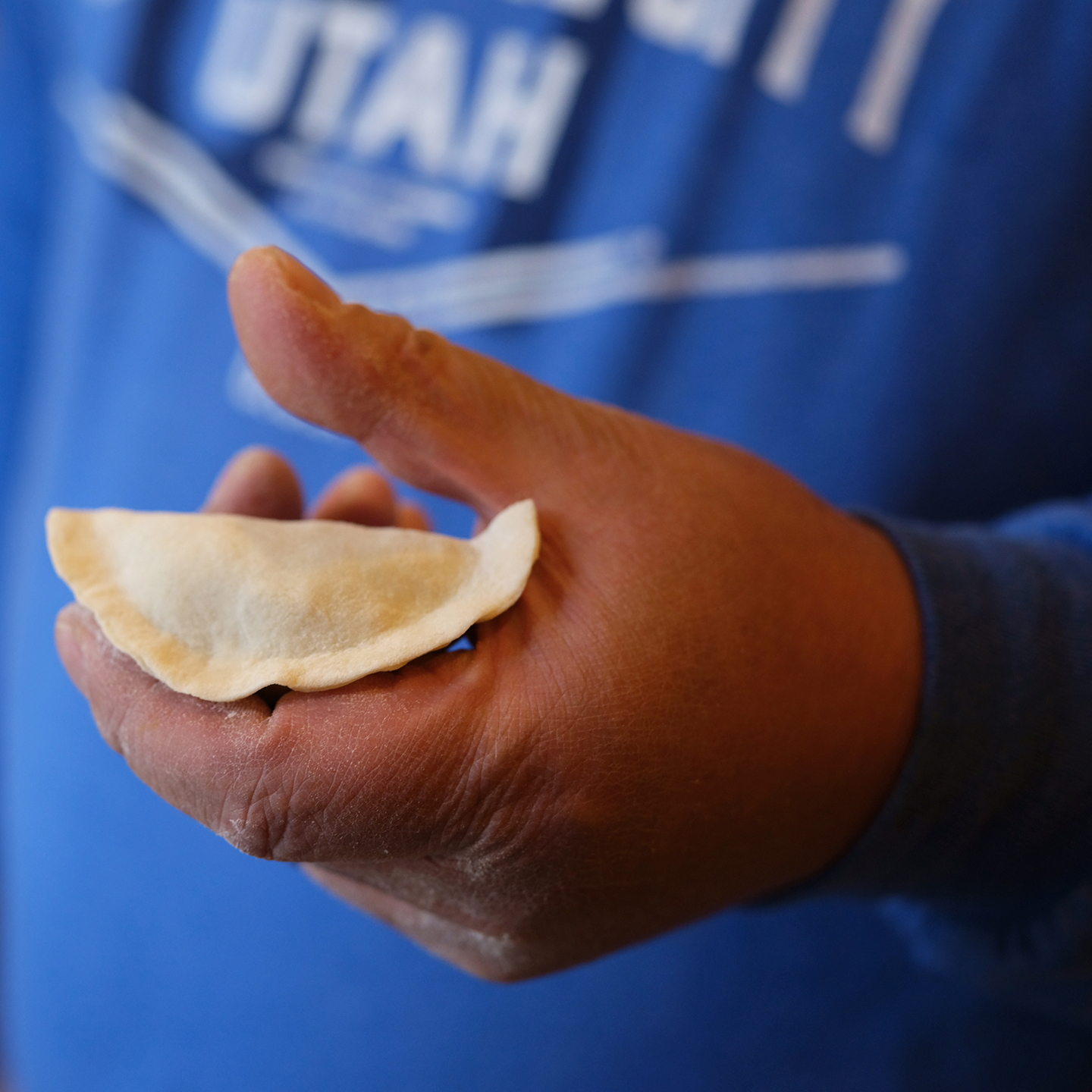
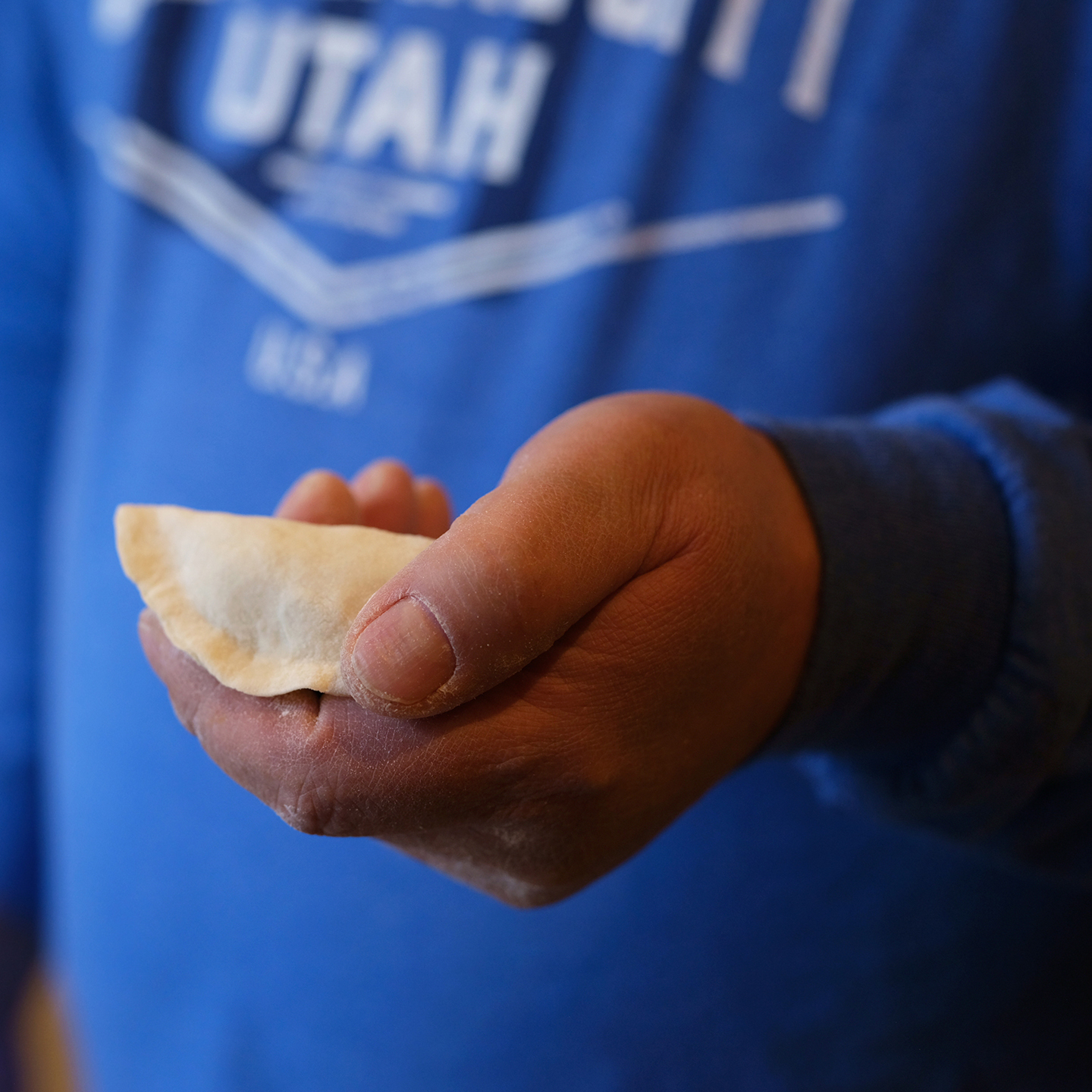
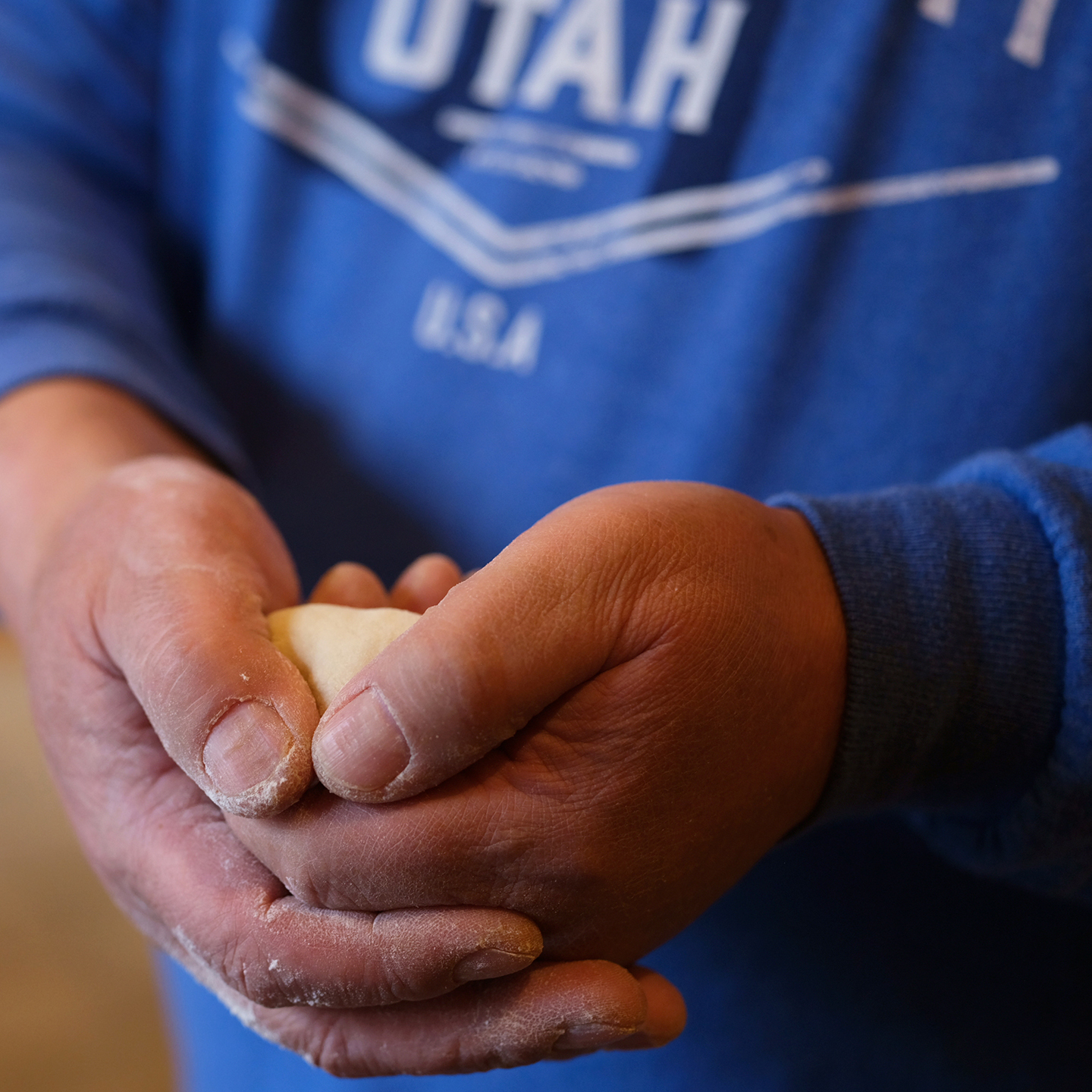
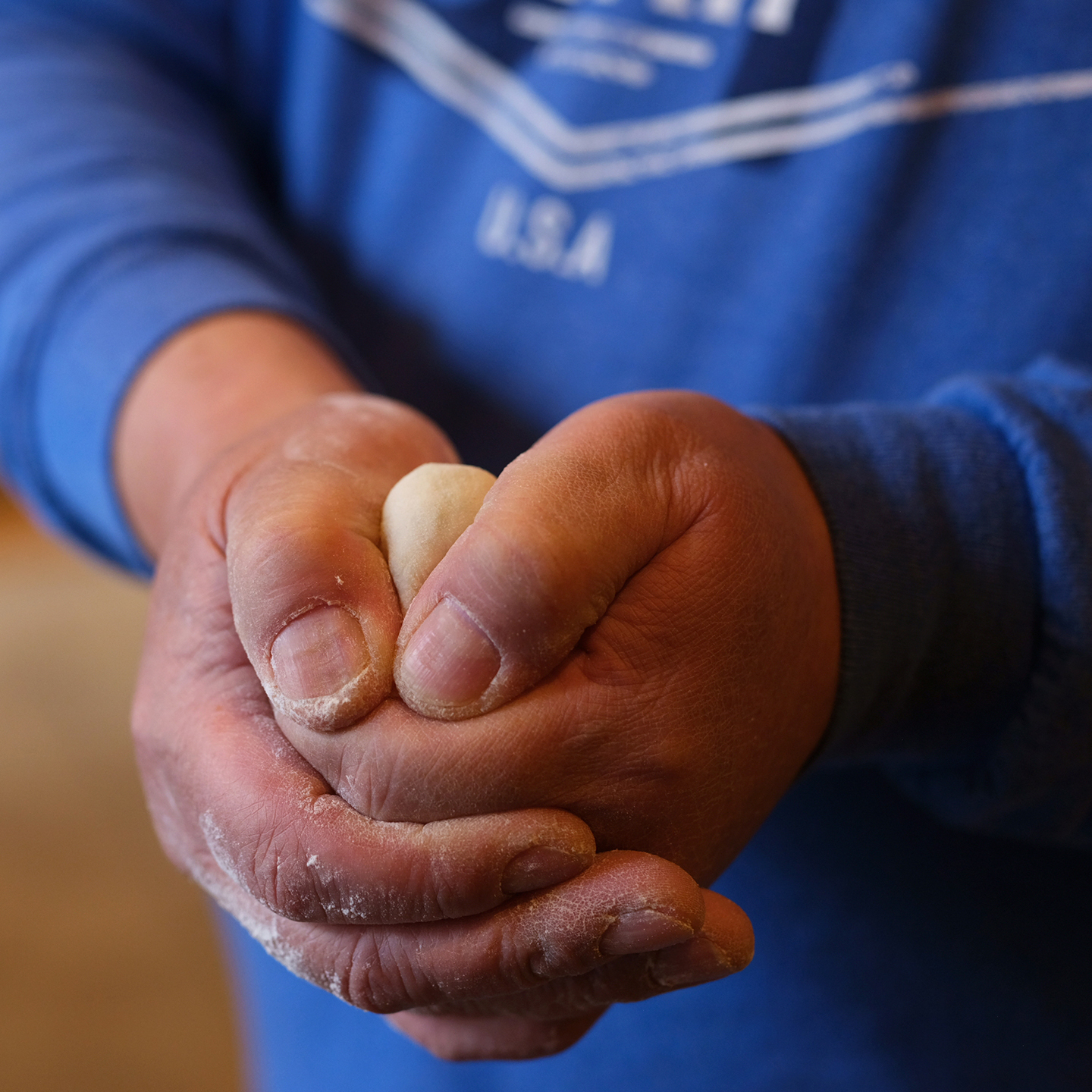
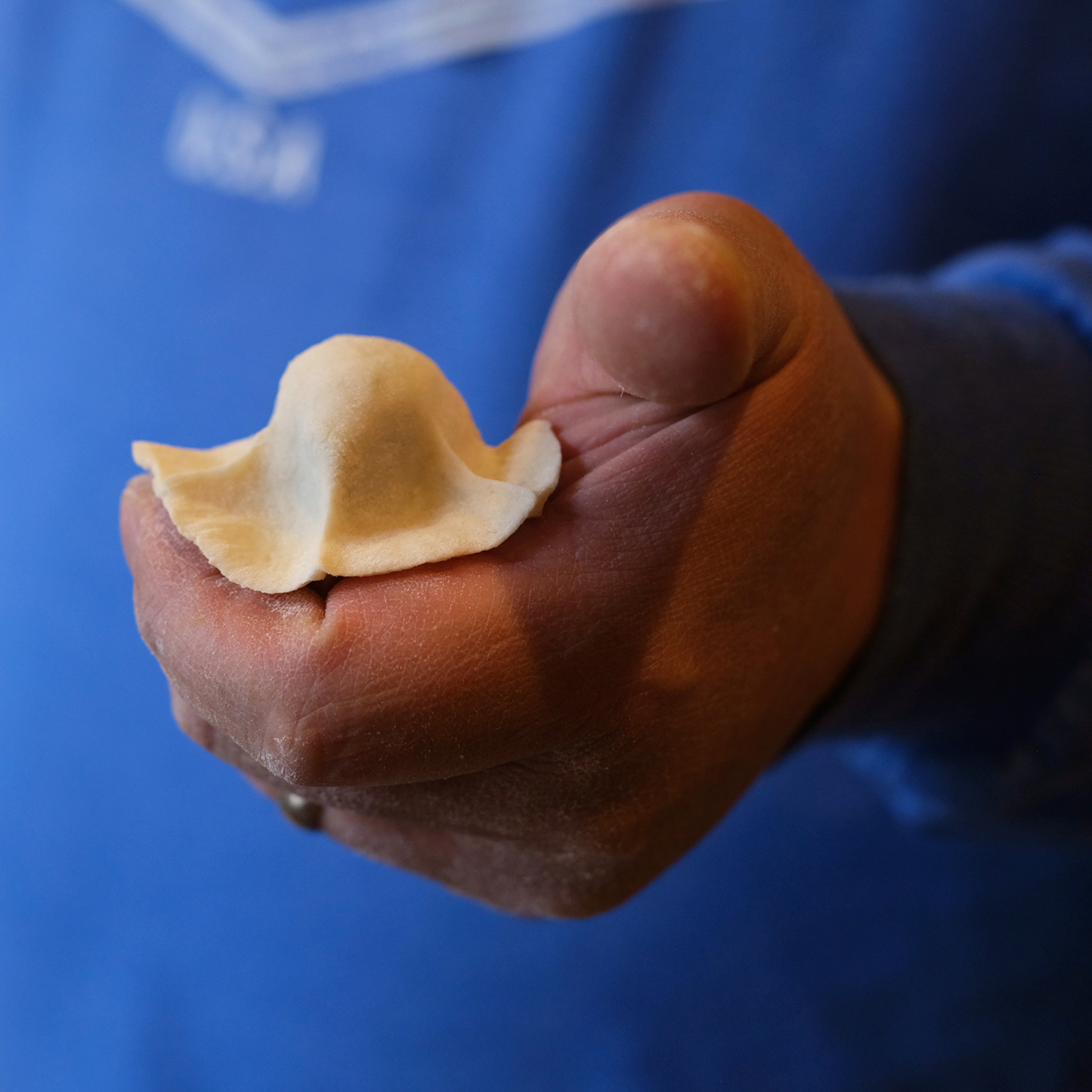
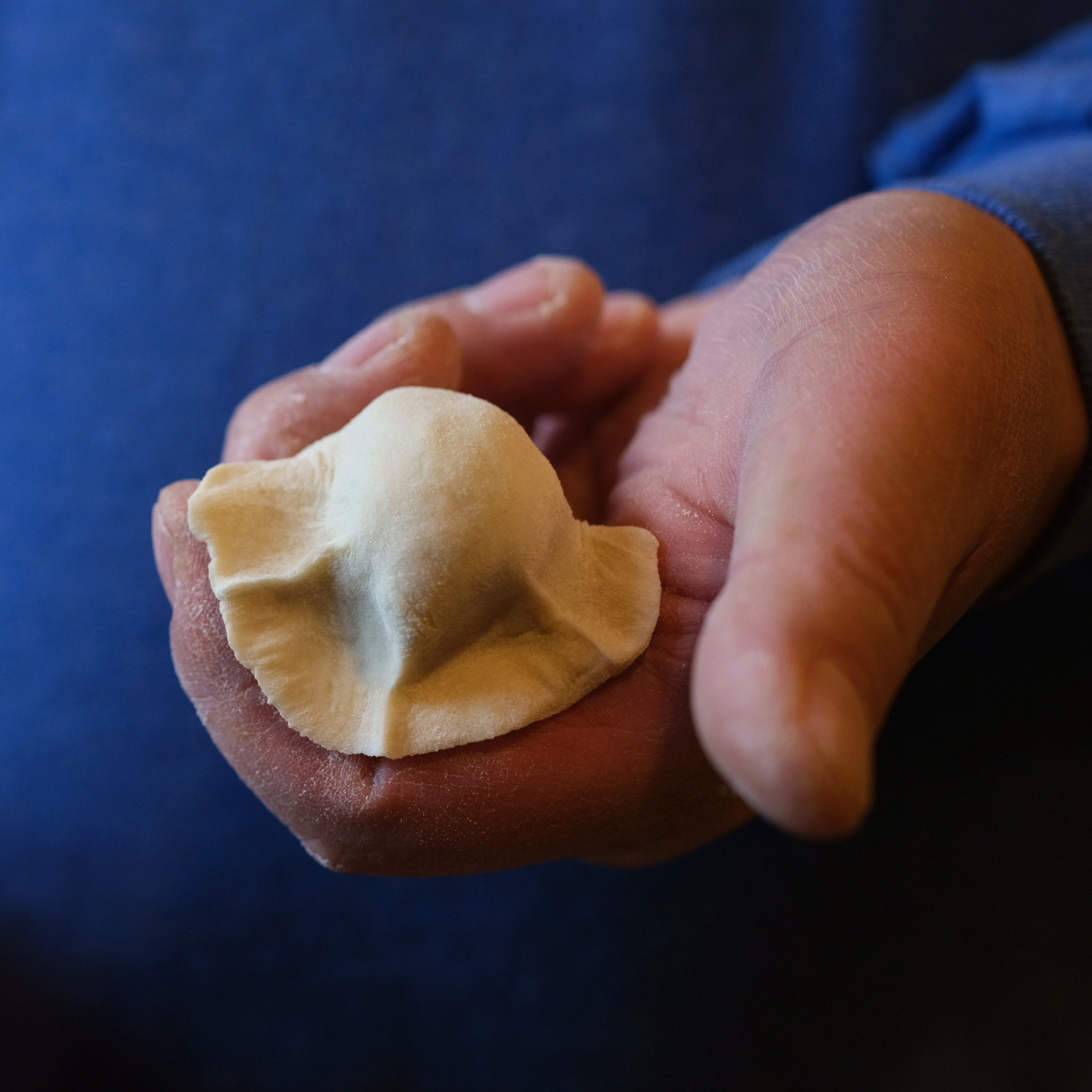
Make sure that the areas nearing the outside circumference of the dough do not have meat mixture, as this will make the dough adhesion tough to achieve when wet and could cause your dumplings to open up during cooking.
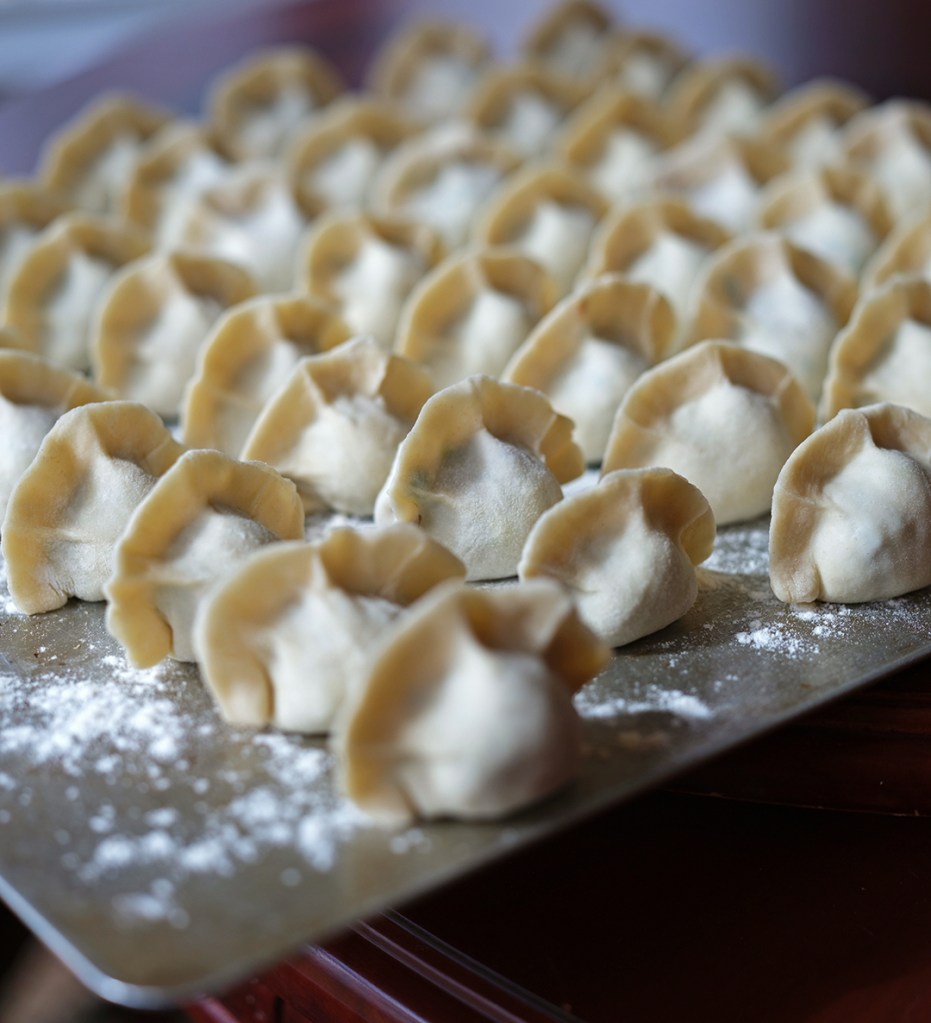
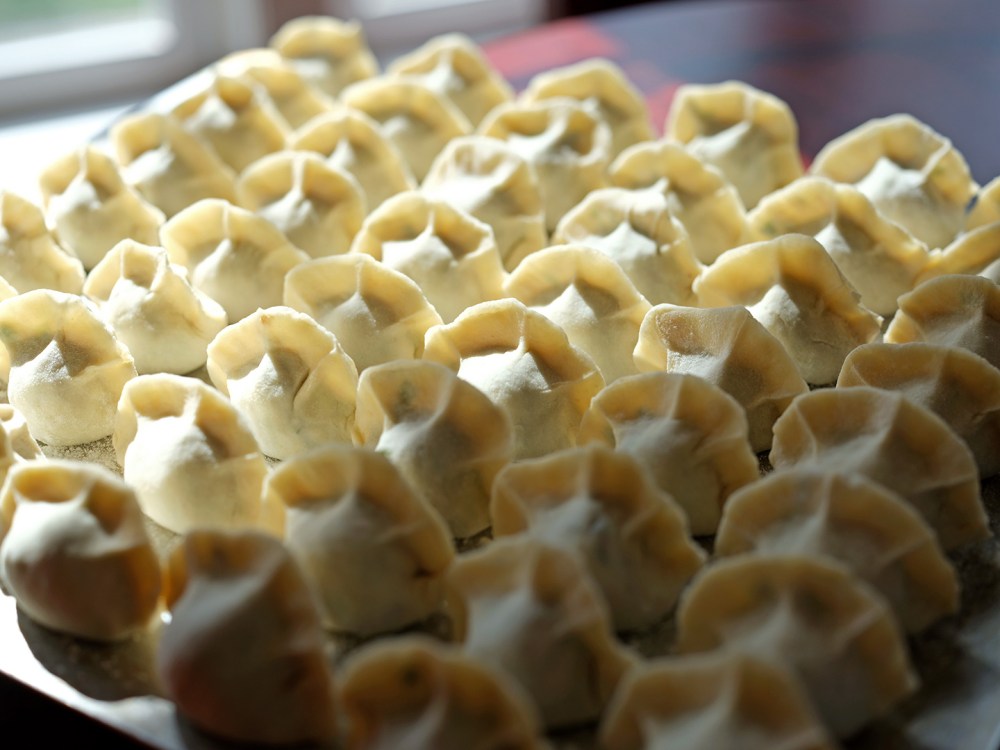
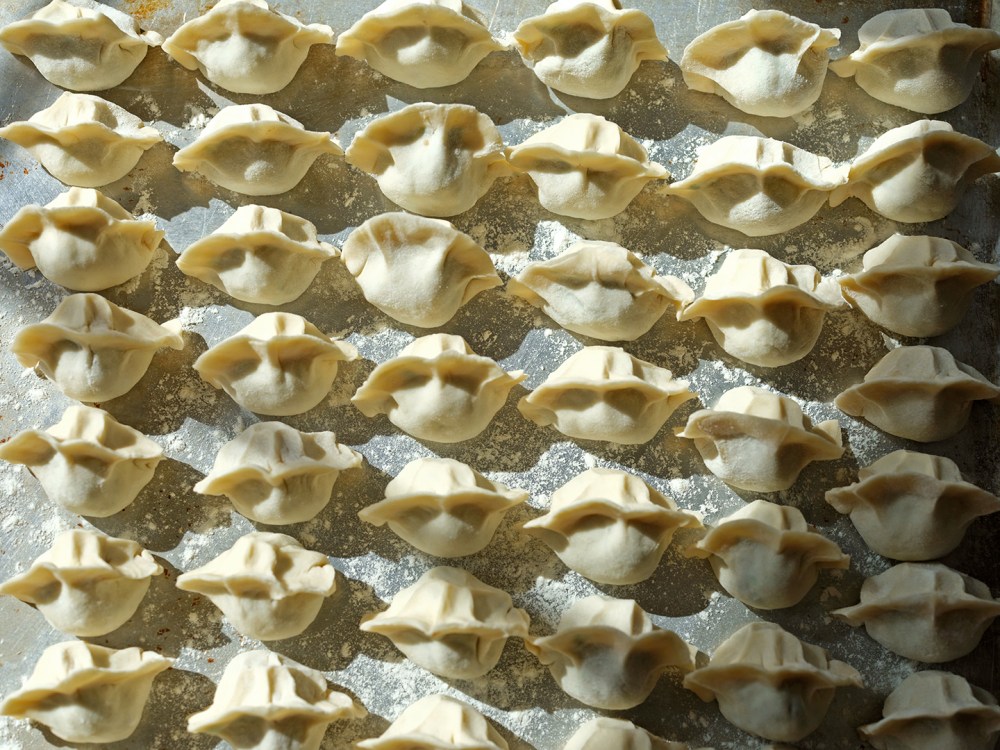
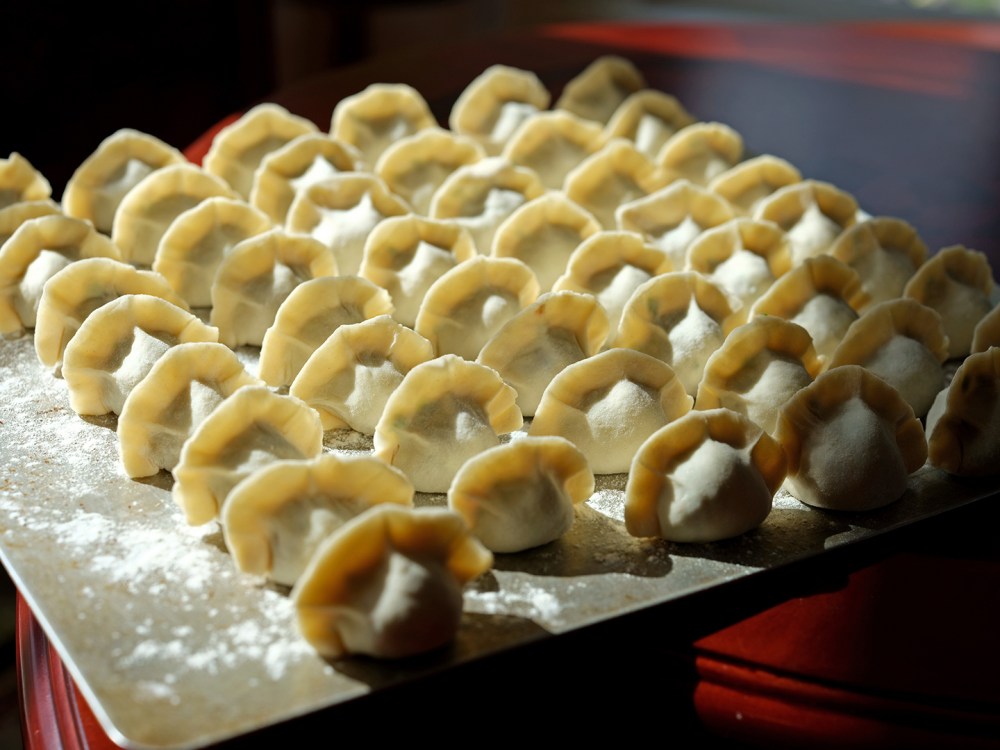
Don’t worry if your dumplings don’t look perfect; the main goal should be to ensure that they are safely closed along the edges. Check our “blog vs reality” versions below. Remember, practice makes perfect – and even the silliest looking dumpling will taste totally delicious!
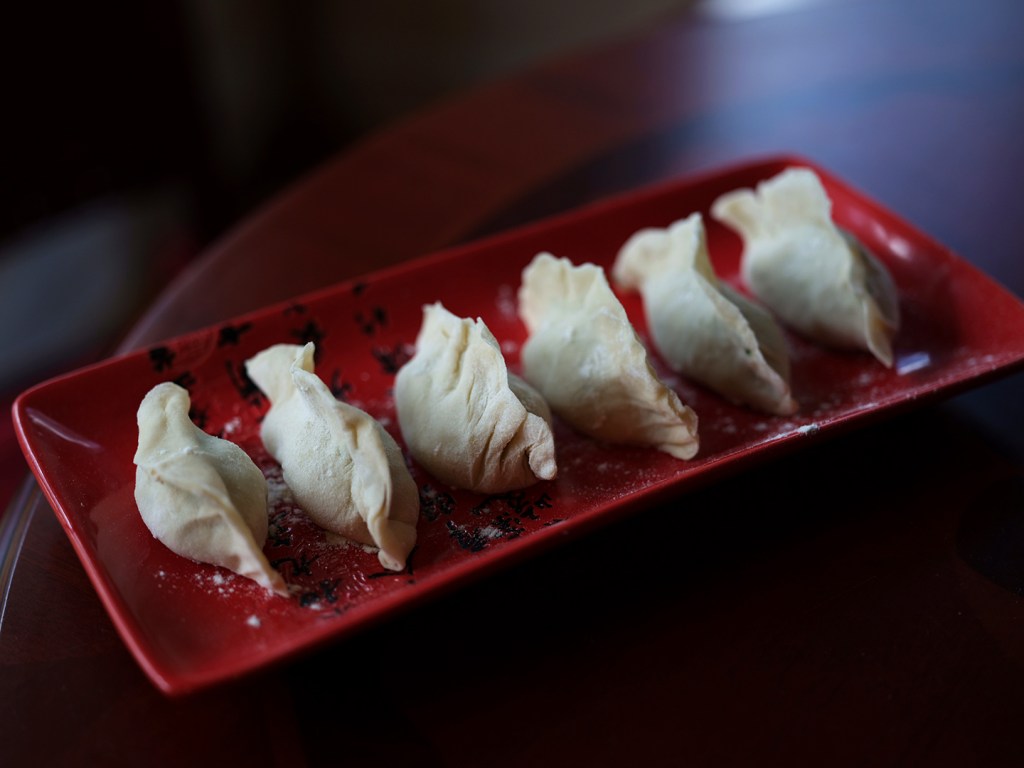
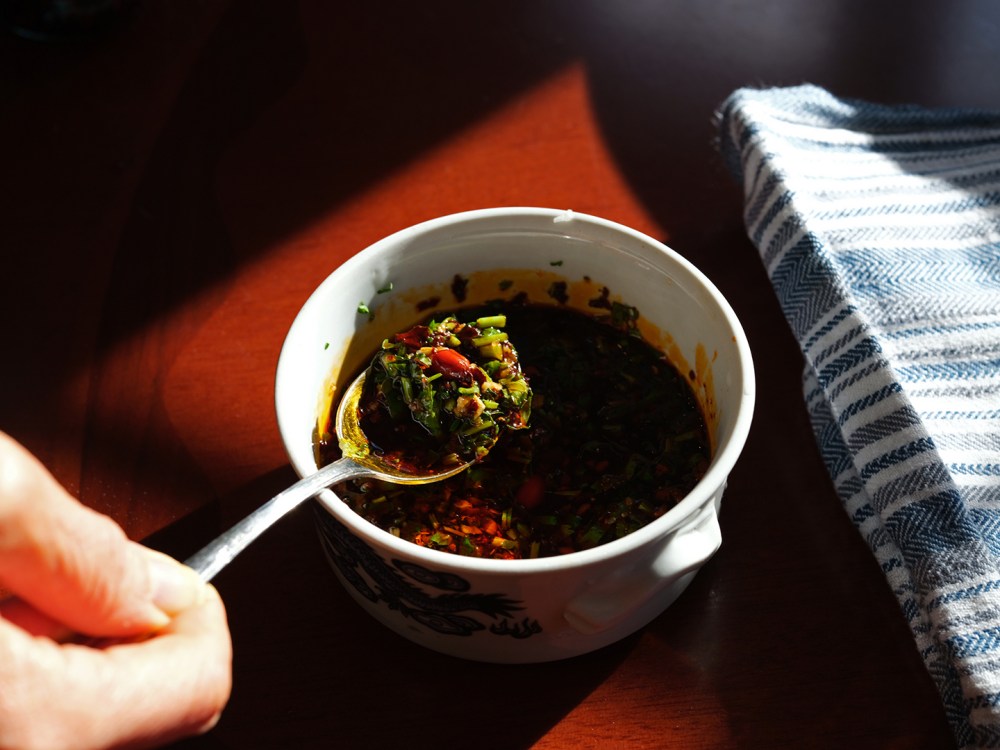
The last step before cooking is to prepare your dipping sauce. This one has a delicious spice to it; feel free to remove the chili if you prefer a mild sauce. In a sauce-appropriate bowl, add 1/2 cup of freshly chopped cilantro and 2 cloves of finely chopped garlic.

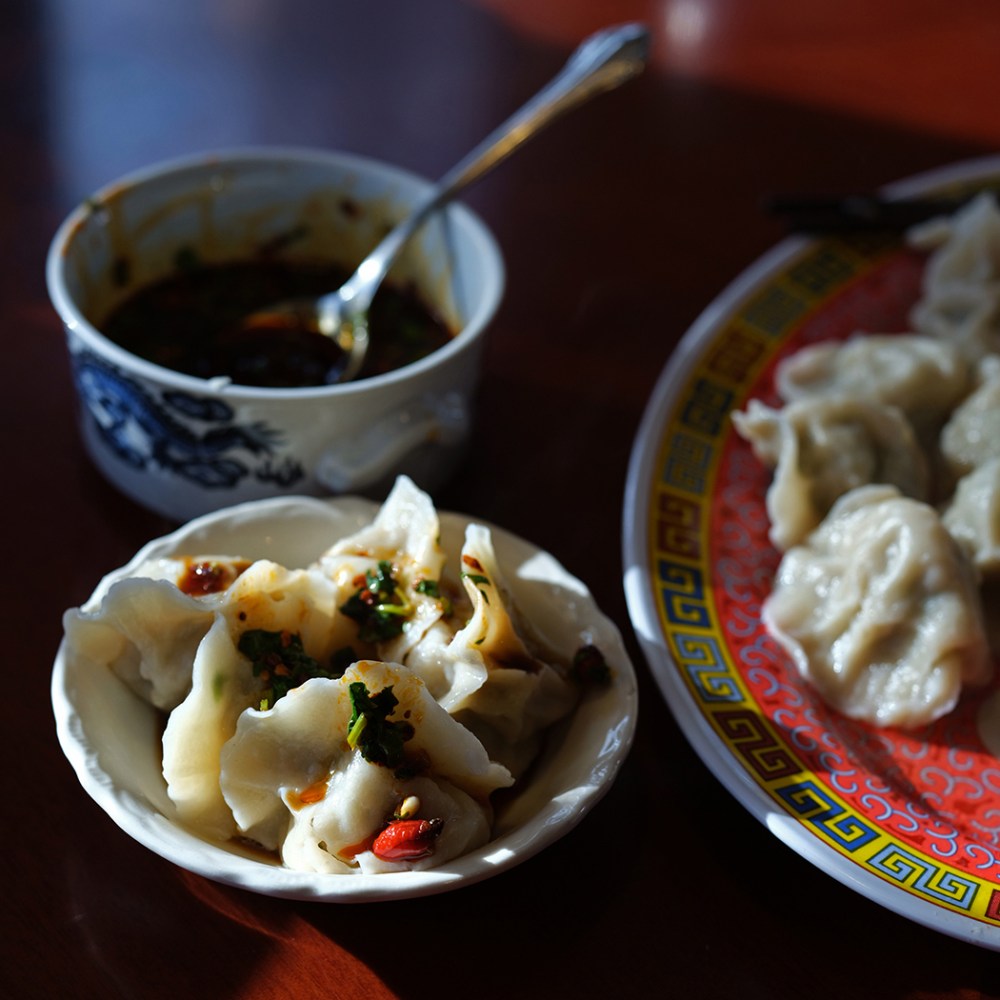
In a small sauce pan over high flame, heat 1-2 tablespoons of olive oil. Drizzle this hot oil over the cilantro and garlic. Add in 1/4 cup of soy sauce, 1/8 cup of Chinese black vinegar, 2 tablespoons of fried chili mixture, and a dash of sugar. Stir together, add a splash of water to dilute the sauce, and set aside.
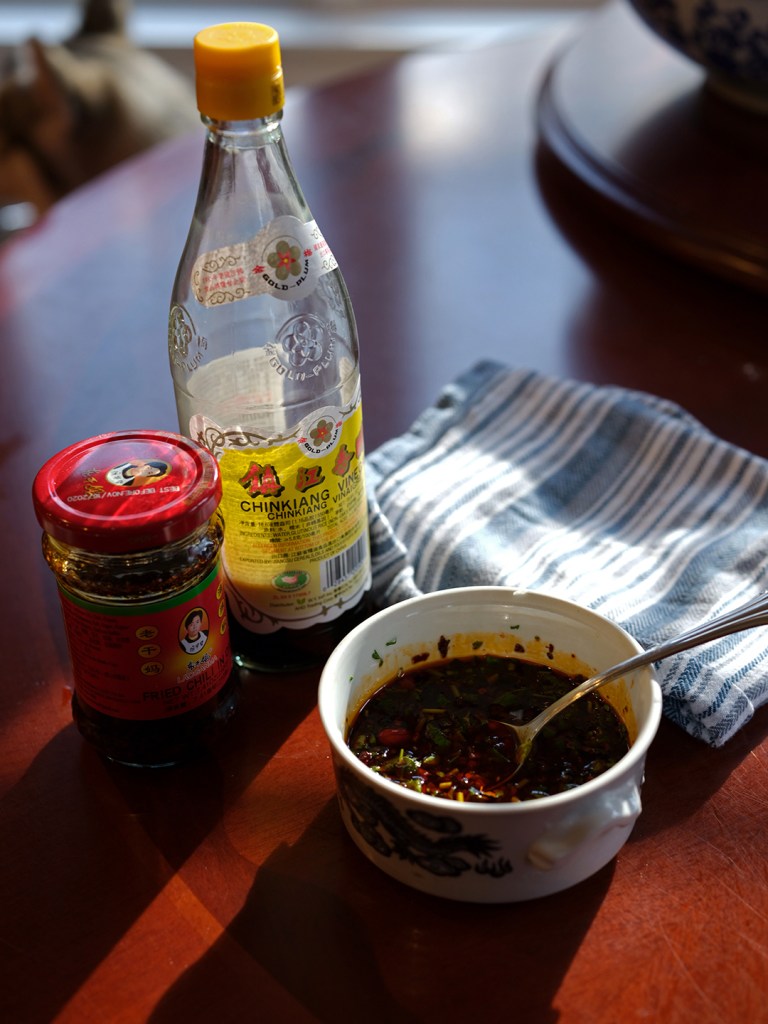
This kind of sauce is appropriate for a wide range of purposes – feel free to use leftover sauce in noodles or as a scrumptious scallion pancake dipping sauce!
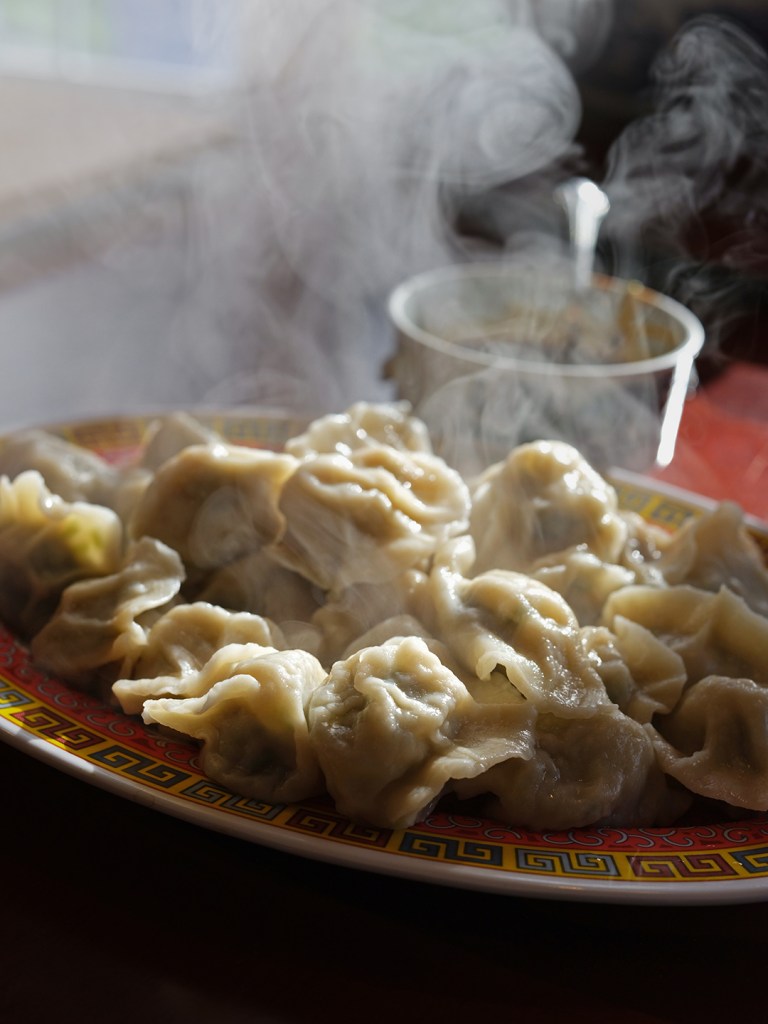
Fill 2/3 of a large pot with water and bring to a rolling boil. Carefully slide 15-20 dumplings in from the side of the pot, stirring the pot after all dumplings enter the water to prevent sticking in that initial phase. The cooking process is very quick: after dumplings are in the pot, cover the pot. Allow water to come back to a boil. Add in 1 cup of cold water, and then cover the pot again. Allow the water to come back to a boil again. Add in a second cup of cold water, and once the water comes back to a boil this second time, your dumplings will be done. Total cooking time should range from 3-5 minutes, depending on your pot size and number of dumplings.
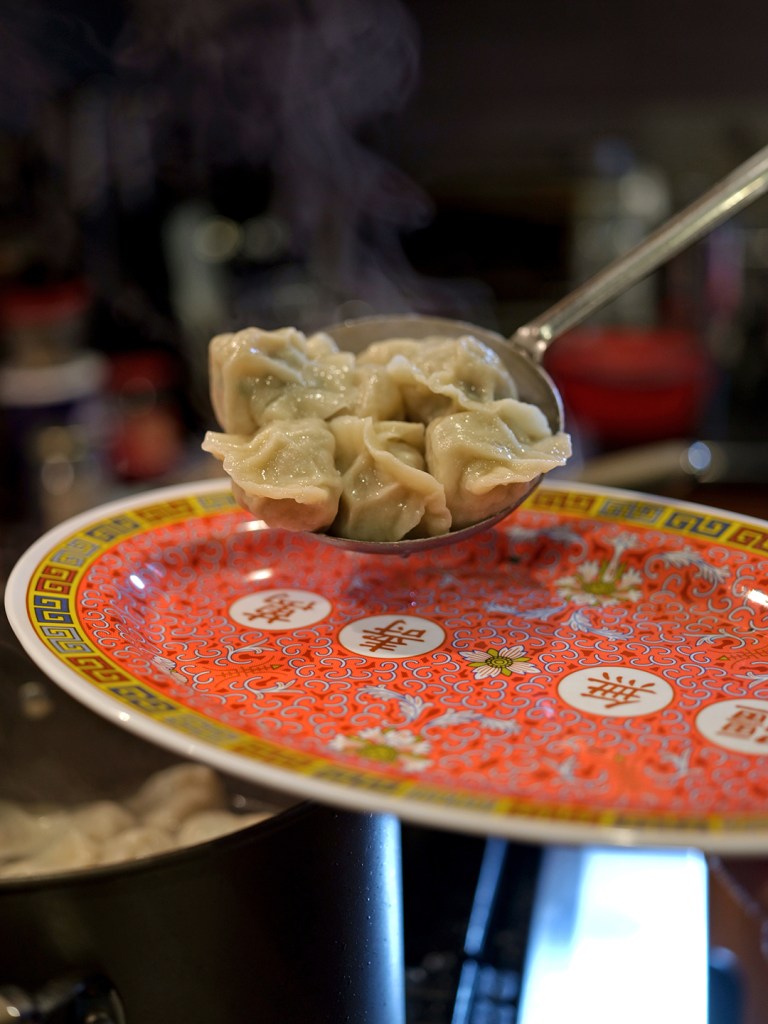
Quickly remove dumplings with a strainer and serve hot alongside dipping sauce. We suggest you enjoy these perfectly-sized dumplings right away, so either wrap, eat, and return to wrapping, or wrap all dumplings at once but only cook what you’ll eat that day.
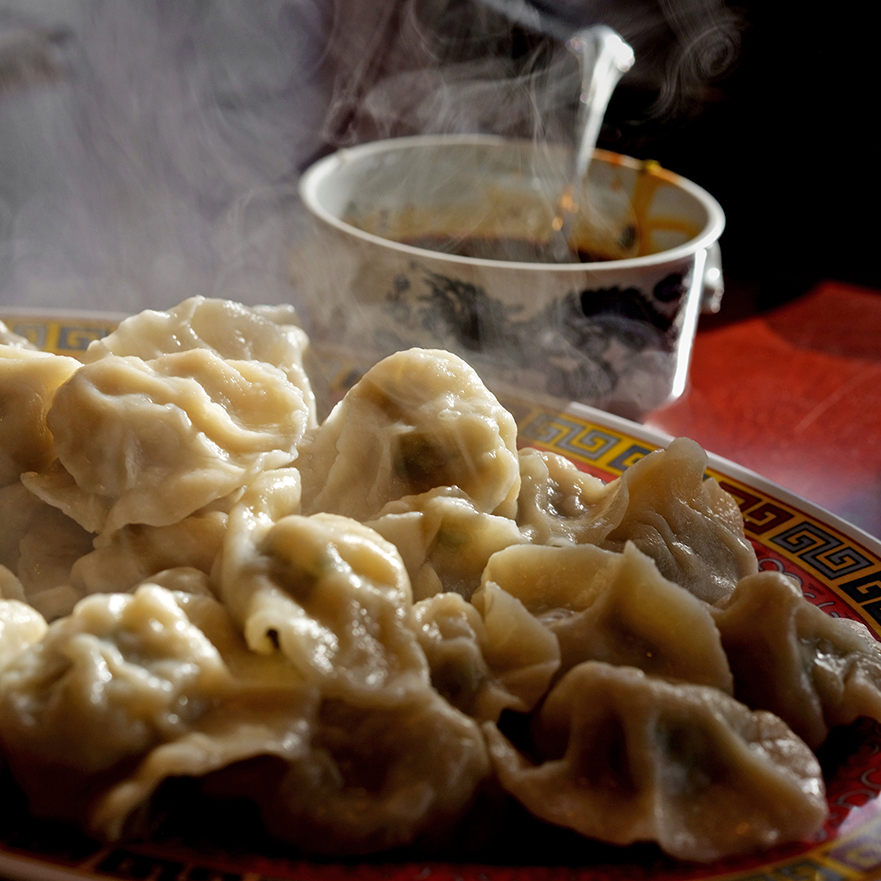
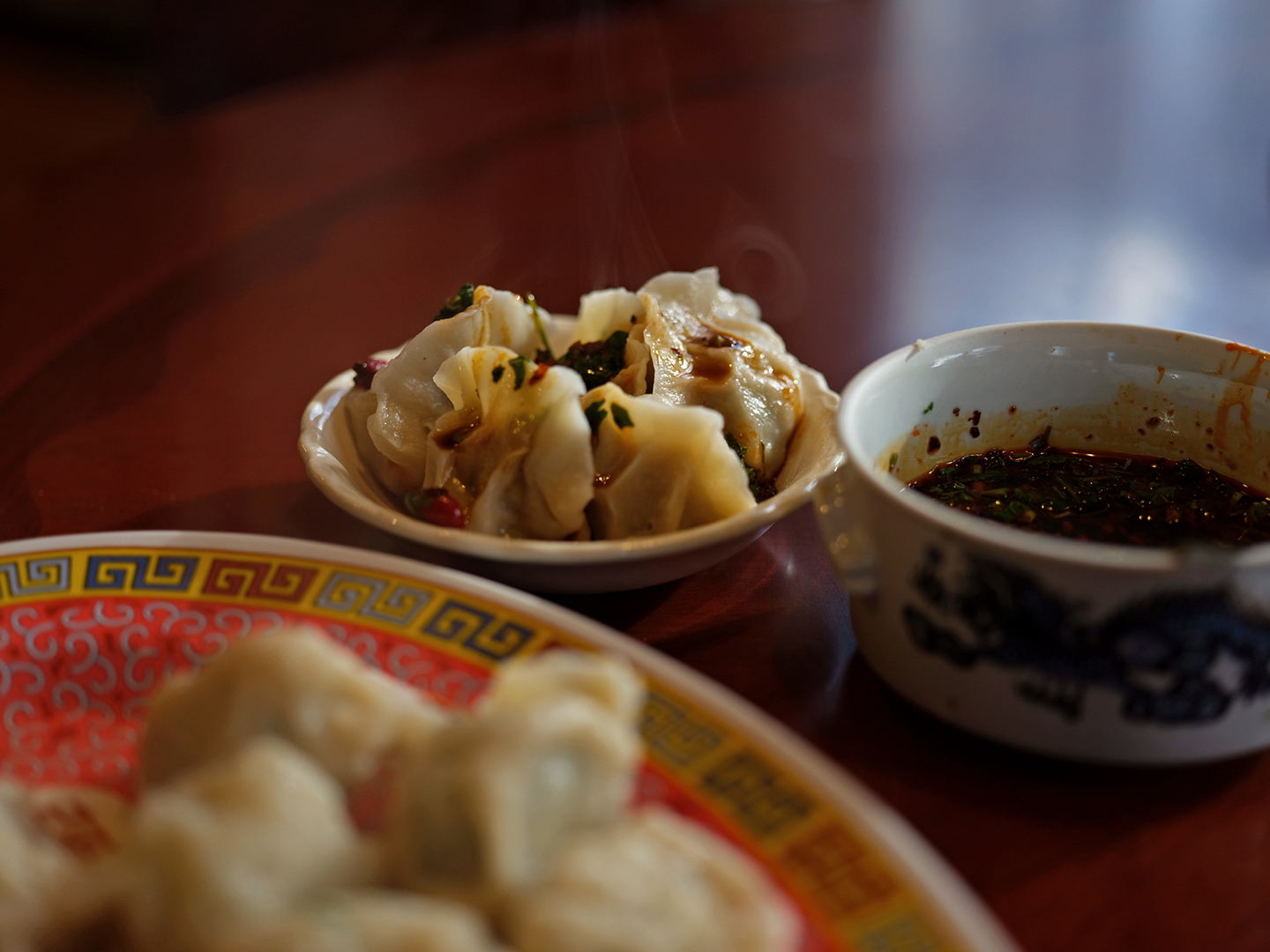
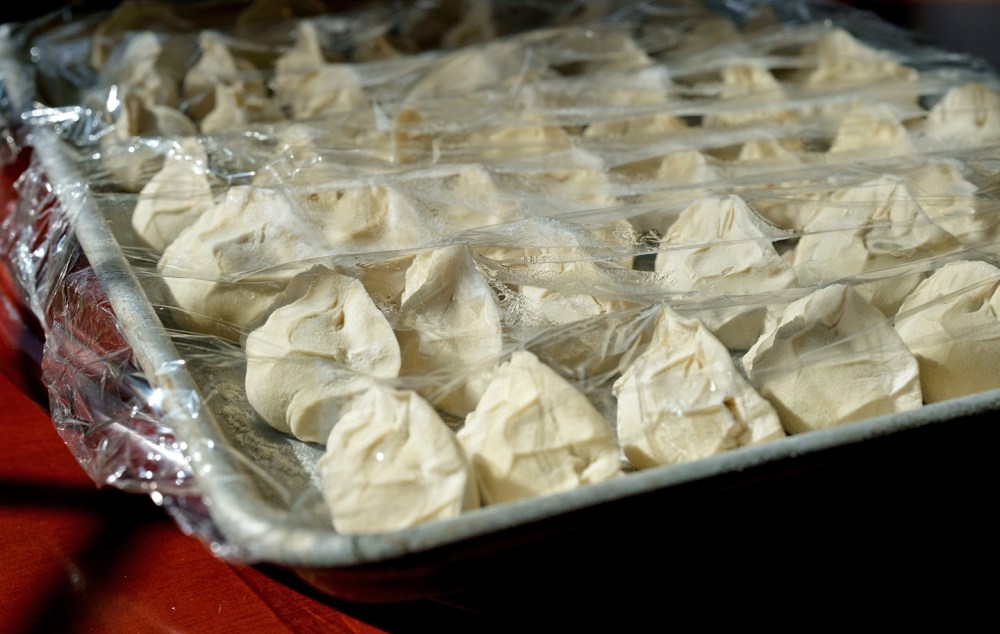
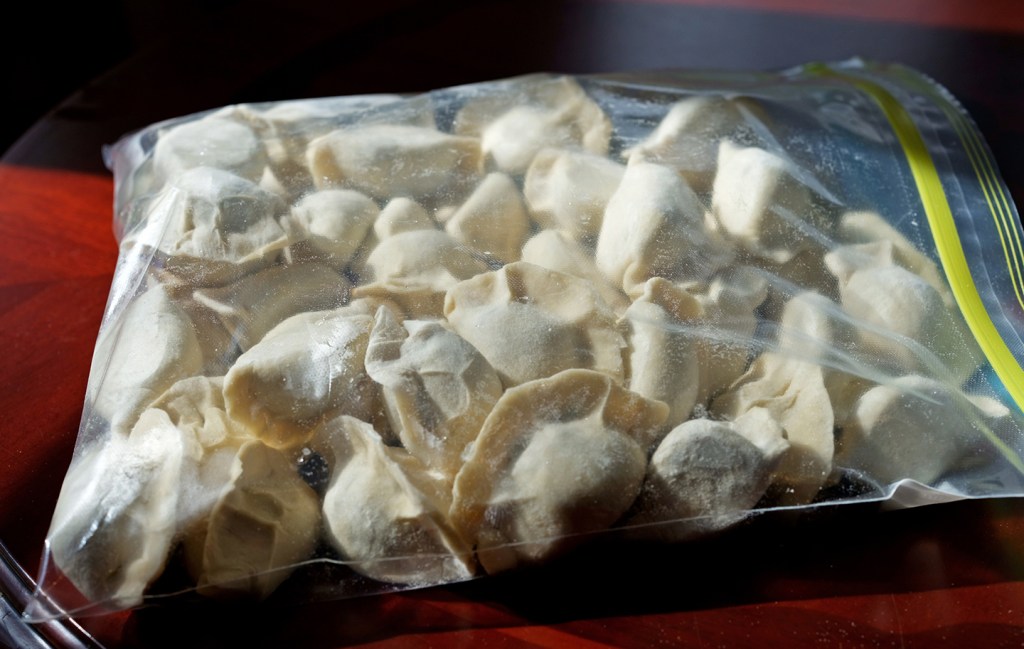
All leftovers (uncooked, wrapped dumplings) can be frozen on a flour-dusted baking sheet under plastic food wrap, subsequently stored in a freezer bag, and easily enjoyed on another day for up to a month. To recook, air defrost until the dough portion is soft to the touch and repeat the cooking process described above.
We hope you delight in the process of making and enjoying these traditional Chinese dumplings with a beefy twist. There are plenty of other special meat fillings we’ll touch on in the future, but for now, please gobble these up with your loved ones!
 Yummy Yang
Juicy and full of flavor. I never knew the beef dumplings can taste so delicious.
LikeLiked by 1 person